Campaign Scaling & Optimization
Scale winning campaigns and optimize for maximum ROI.
7 min
Loading...
Ready to start automating?
Join hundreds businesses growing with Renderfire
Scale winning campaigns and optimize for maximum ROI.
Join hundreds businesses growing with Renderfire
Don't scale until you're ready: at least one 10K+ view video, 30+ days of consistent posting, 2-3 winning formats identified, and 3%+ engagement rate. Scale in phases: first increase frequency (1→3 posts/day), then add platforms, then multiply accounts. Every new account needs full 7-day warmup. Optimize weekly by analyzing top performers and testing one new variable.
Key Insight: Optimization is an ongoing process. Once you identify what works, systematic scaling and continuous improvement drive exponential growth. But scaling zero views multiplied by 10 accounts still equals zero—prove your content works first.
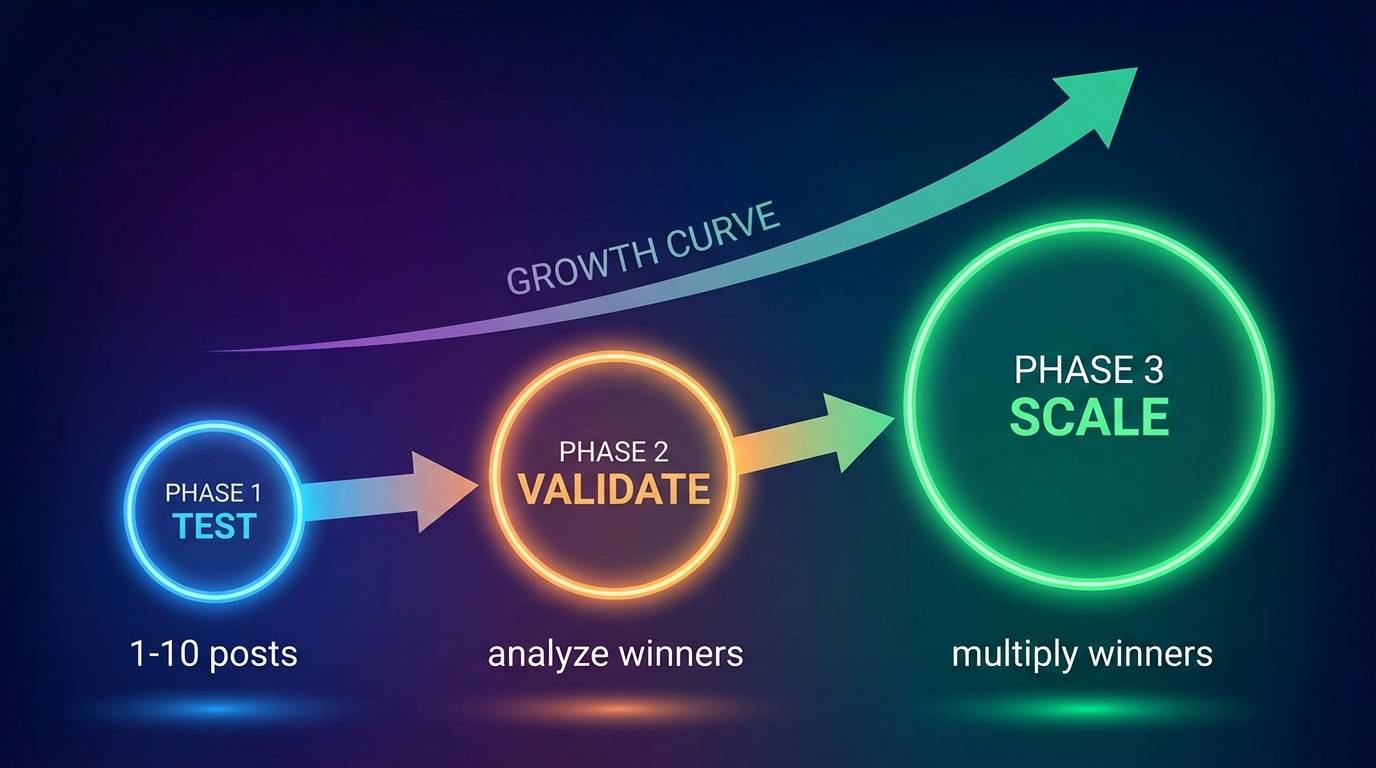
Don't scale until you've proven your content works. Scaling zero views × 10 accounts = still zero views. Wait for these signals first.
The biggest mistake creators make is scaling too early. They create content, get minimal views, and think "I just need more accounts and more posts!" So they create 10 accounts, post 3x per day, and burn out within weeks while still getting minimal views. They scaled failure, not success.
Readiness Signal #1: At least one video with 10K+ views. This proves your content can work. One viral video (or near-viral) shows you've cracked the code-your hook, topic, or format resonated with the algorithm and audience. Before this milestone, focus on iteration and improvement, not scaling.
Readiness Signal #2: Consistent posting for 30+ days. You've proven commitment to consistency. Scaling requires discipline, and if you can't maintain consistency on one account, you definitely can't maintain it across multiple accounts or increased frequency. Thirty days minimum demonstrates sustainable habits.
Readiness Signal #3: Identified 2-3 winning content formats. You know what works for your audience. Maybe it's quick tutorials, behind-the-scenes content, or reaction videos. Whatever it is, you can reliably create content in these formats that performs decently. This repeatability is essential for scaling.
Readiness Signal #4: Engagement rate above 3%. Your audience actively engages with your content through likes, comments, and shares. Low engagement means the algorithm won't push your content no matter how much you scale. Fix engagement first, then scale. Check your current rate with our free TikTok or Instagram engagement calculators.
Readiness Signal #5: Growing follower count (even if slow). The trajectory is positive. You don't need explosive growth yet, but you need growth. Flat or declining followers indicate a fundamental content problem that scaling won't fix-it will only amplify.
If you don't have these five signals, don't scale. Instead, focus on content improvement: test different hooks, study top performers in your niche, experiment with formats, and analyze what's working. Scaling comes after you've proven your content model works.
Warning: Scaling too early wastes effort. Make sure content works on one account first before expanding to more accounts or platforms.
Follow these phases in order. Each phase builds on the previous one. Don't skip steps or you risk burning out and producing low-quality content.
Phase 1: Frequency Increase. Once your content is proven, the first scaling lever is posting frequency. Go from 1 post per day to 2-3 posts per day. This is the lowest-risk scaling method because you're working with a proven account and proven content formats.
Batch create your content to make this sustainable. Dedicate 3-4 hours once or twice per week to creating all your content. Record multiple videos back-to-back while you're in the zone. This is far more efficient than creating content daily. Space your posts 4-6 hours apart-don't dump all three posts at once. The algorithm treats this as spam and limits distribution.
Most importantly, maintain quality. Three mediocre posts per day is worse than one great post per day. Only increase frequency if you can sustain your quality standards. If quality drops, pull back to your previous frequency.
Content creation is the scaling bottleneck for most businesses. Going from 1 to 3 posts daily means 3x the filming, editing, and production time. For SaaS founders and e-commerce brands who want organic growth without scaling their team, Renderfire automates content that drives traffic to your website-connect your product, auto-generate hook+demo videos, slideshows, and AI videos, then auto-publish to TikTok, Instagram, YouTube, Facebook, Pinterest, Threads, and LinkedIn while you focus on your business. Learn more in our guide on automating your content farm.
Phase 2: Platform Expansion. Once you've mastered high-frequency posting on one platform, add a complementary platform. If you're crushing it on TikTok, add Instagram Reels. If YouTube is working, add YouTube Shorts or TikTok. The key is choosing platforms with overlapping content formats so you can repurpose content.
Repurpose your best-performing content with platform-specific adaptations. Don't just copy-paste-adjust captions for platform culture, optimize aspect ratios, and use platform-specific features (trending sounds on TikTok, product tags on Instagram, etc.). Track performance separately by platform-what works on one might flop on another.
Start conservatively on the new platform: 1 post per day maximum until you understand its rhythm and algorithm. Once you're seeing consistent views, you can increase frequency there too.
Phase 3: Account Multiplication. This is the highest-risk scaling lever and should only be done after Phases 1 and 2 are working smoothly. Adding a second account on the same platform multiplies your reach but also multiplies your effort and risk.
Every new account requires a full 7-day warmup period-no shortcuts. The algorithm treats each account independently, and rushing this causes shadowbans. Post manually for the first 10 posts on the new account to establish trust. Slightly vary your content between accounts-exact duplicates get flagged as spam. You can cover the same topics from different angles or use different hooks for the same content.
Monitor both accounts separately. Sometimes a new account underperforms initially as the algorithm learns your niche. Give it 30 days of consistent posting before deciding whether to continue or abandon the account. For a comprehensive approach to managing multiple accounts, see our guide on building a TikTok and Instagram content farm.
Once you're scaling, optimize every element systematically. Small improvements in hooks, value delivery, and CTAs compound over time.
Hook Optimization: Your hook determines whether viewers keep watching or scroll away. Analyze your top-performing videos-what hooks did they use? Test variations of successful hooks across new videos. Track 3-second retention rate in your analytics. If it's below 30%, your hooks need work. Experiment with different hook styles: bold statements, intriguing questions, pattern interrupts, shocking facts. What works for your audience?
Value Optimization: Once viewers stay past the hook, you need to deliver value that keeps them engaged. Identify sections where viewers drop off using retention analytics. These are your problem areas-either cut them entirely or make them more engaging. Extend the sections where retention stays high-viewers like that content, so give them more of it. Pack more value into your videos by cutting fluff and speeding up pacing.
CTA Optimization: Your call-to-action drives specific behaviors: likes, comments, shares, follows, link clicks. Test different CTAs to see which drives the most engagement. Ask questions that prompt comments. Encourage saves for content people want to reference later. Request shares when content would genuinely help someone's audience. Track which CTAs work best for your audience and double down on those.
Posting Time Optimization: Your audience is active at specific times. Test posting at different times throughout the day and week. Identify your 2-3 best-performing time slots based on initial engagement (first hour views and engagement). Post consistently in those slots-the algorithm learns when your audience expects content and pushes it harder during those windows.
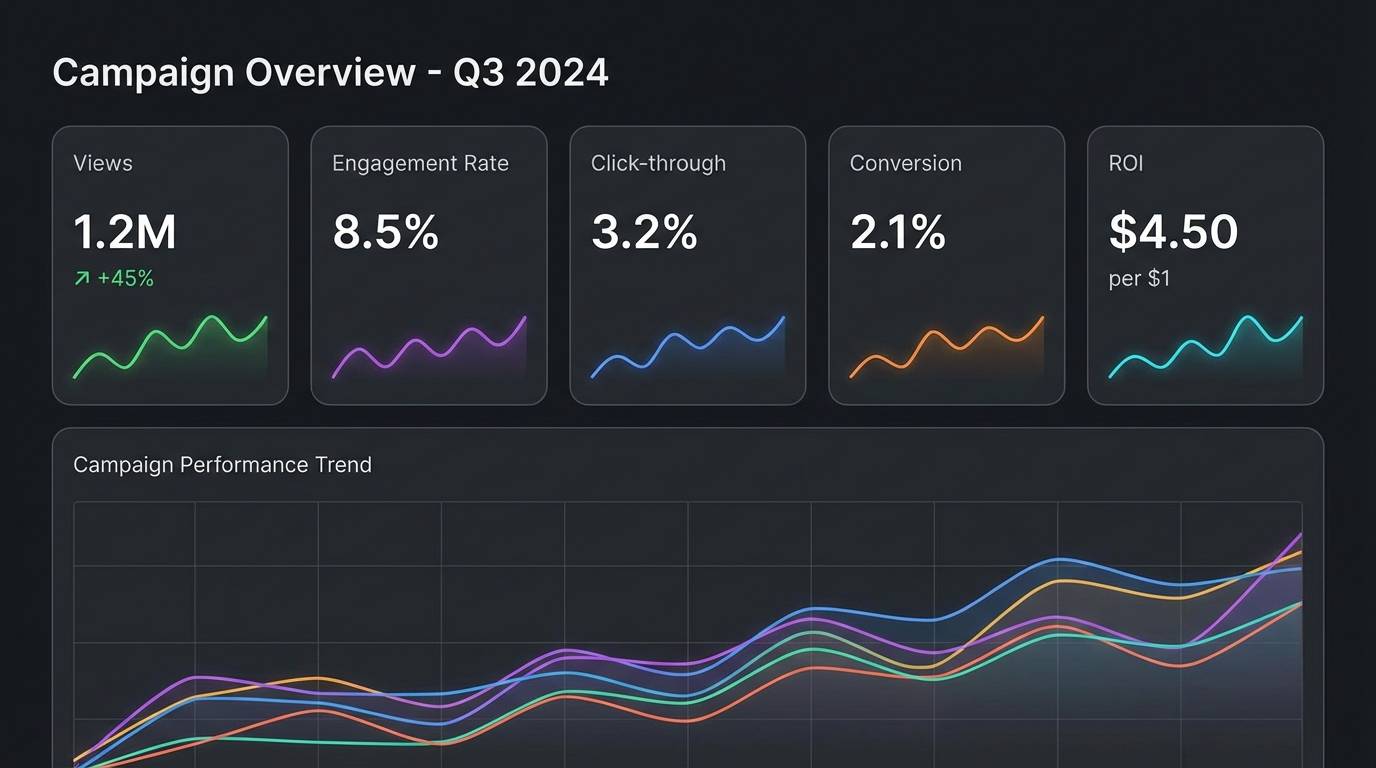
Each platform rewards different behaviors. Optimize for what the algorithm actually cares about on each platform.
TikTok prioritizes completion rate above all else. The percentage of viewers who watch your entire video is the strongest signal for TikTok's algorithm. Rewatches indicate highly engaging content-when viewers immediately watch again, it signals exceptional value. Shares are the ultimate endorsement-the algorithm pushes heavily shared content to massive audiences. Optimize TikTok content for watch-through by keeping videos tight (30-60 seconds ideally), front-loading value, and creating content worth rewatching.
Instagram weights saves very heavily. When viewers save your content, Instagram interprets it as highly valuable content worth revisiting. This is the strongest positive signal on Instagram. Shares to Stories and DMs also drive distribution. Comments indicate engagement and community. Optimize Instagram content to be saveable-create educational carousels, tutorials people want to reference later, or inspiring content they want to revisit.
YouTube focuses on click-through rate and watch time. CTR (click-through rate) is determined by your thumbnail and title-if people don't click, nothing else matters. Watch time measures total minutes watched-longer videos with high retention perform best. Session time (how long viewers stay on YouTube after watching your video) also influences the algorithm. Optimize YouTube content with compelling thumbnails, keyword-rich titles, strong hooks, and longer formats (8-15 minutes) when your retention can support it.
When metrics drop, diagnose the issue systematically and apply targeted fixes. Don't panic-most drops are temporary and fixable.
Views dropping: This usually indicates algorithm changes or increased competition in your niche. Solution: Refresh your content format with new angles, test new hook styles that grab attention faster, and increase posting frequency to get more at-bats. Study what's currently going viral in your niche and identify new patterns.
Engagement dropping: Your audience is losing interest or your CTAs aren't compelling. Solution: Strengthen your calls-to-action with specific asks ("Comment your biggest struggle with X"), introduce new content formats to break monotony, and optimize your posting schedule based on when engagement is highest. Ask yourself: would you engage with this content if you saw it in your feed?
Follower growth slowing: You're not converting viewers into followers effectively. Solution: Add explicit "follow for more content like this" CTAs in your videos, improve posting consistency (followers come from seeing you repeatedly), and optimize your bio to clearly communicate value. Review your profile-does it make following an obvious decision?
Optimization is a continuous process, not a one-time event. Use this weekly checklist to stay on track.
Every week, dedicate 30-60 minutes to reviewing and optimizing your content strategy. This systematic approach ensures continuous improvement rather than random reactive changes.
Review analytics for all content posted that week. Don't just glance-actually analyze the numbers. Which videos got the most views? Why? Which had the highest engagement rate? What made them different?
Identify your top performer from the week and analyze why it succeeded. Was it the hook? The topic? The format? The posting time? Understanding success is more valuable than understanding failure-you want to replicate winners, not just avoid losers.
Update your content calendar with more of the winning formats. If tutorial-style content crushed it, schedule more tutorials. If a specific sub-topic generated huge engagement, explore it deeper. Double down on what works.
Test one new variable each week. New hook style, posting time, content format, caption strategy, CTA, or thumbnail approach. Systematic testing beats random experimentation because you can track what drove the results.
Adjust your posting schedule based on performance data. If Tuesday 9 AM consistently outperforms Thursday 3 PM, shift your posting to optimize for Tuesday mornings.
Refresh underperforming elements like hooks that don't grab attention, CTAs that don't drive action, or thumbnails (for YouTube) that don't generate clicks. Small tweaks compound over weeks and months.
Track progress toward monthly goals. Are you on track to hit your follower growth target? View count goals? Engagement targets? Weekly check-ins keep you accountable and allow course corrections before you're far off track.
Follow these principles for sustainable scaling. Avoid rushing or cutting corners-they lead to burnout and poor results.
You need 5 signals before scaling: at least one video with 10K+ views (proves content can work), 30+ days of consistent posting, 2-3 identified winning formats, 3%+ engagement rate, and positive follower growth trajectory. If you don't have these signals, focus on content improvement first—scaling failure just multiplies failure.
Scale in phases: (1) First increase posting frequency from 1 to 2-3 posts/day on your current platform. (2) Then add a complementary platform (e.g., TikTok → Instagram). (3) Finally, consider account multiplication, but only after phases 1-2 are working smoothly. Each phase builds on the previous one.
Dedicate 30-60 minutes weekly to review analytics, identify your top performer and why it worked, update your content calendar with more winning formats, and test one new variable. Monthly, evaluate which platforms deserve more focus based on ROI. Small weekly improvements compound into significant results over months.
Optimization is a marathon, not a sprint. Small, consistent improvements compound into significant results over time. Data drives decisions—track everything and let the numbers guide you. For testing fundamentals, see our Campaign Setup & Testing guide. For multi-platform strategy, check our Content Repurposing & Distribution guide.