Content Repurposing & Distribution
Master content repurposing across platforms to multiply reach.
12 min
Loading...
Ready to start automating?
Join hundreds businesses growing with Renderfire
Master content repurposing across platforms to multiply reach.
Join hundreds businesses growing with Renderfire
Create one 'master' piece of content, then adapt it for each platform—don't duplicate. Start with 2 platforms maximum (TikTok + Instagram for B2C, LinkedIn + YouTube for B2B), master them, then expand. One 15-minute YouTube video can become 18+ pieces across platforms. Always adapt for each platform's culture—casual for TikTok, aesthetic for Instagram, professional for LinkedIn.
Key Insight: Strategic multi-platform distribution can multiply your reach by 10x while reducing content creation time by 50%. Create once, distribute everywhere strategically—but adapt for each platform's unique culture and algorithm.
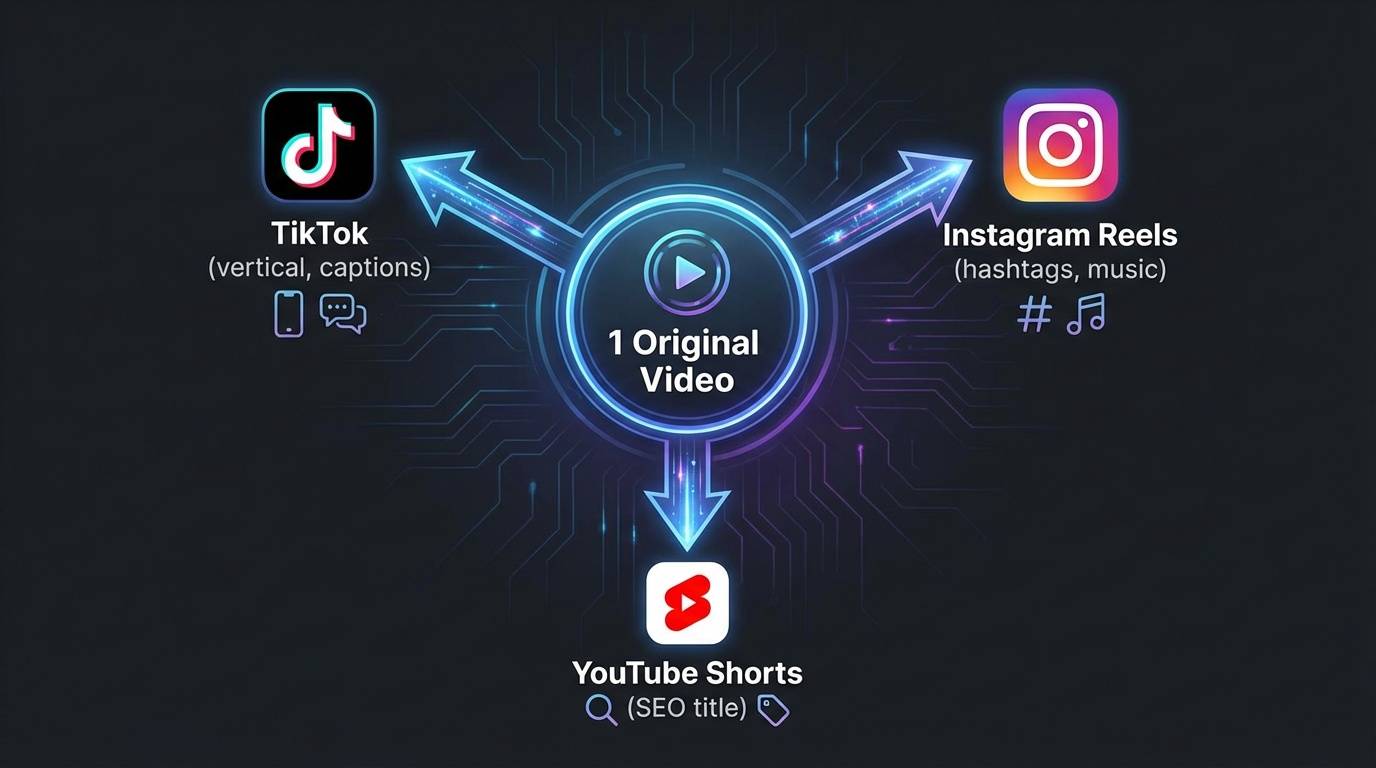
Relying on a single platform is risky. Algorithm changes, policy updates, or account issues can devastate your reach overnight. Multi-platform distribution provides insurance and multiplication.
Most creators put all their eggs in one basket, building their entire presence on TikTok or Instagram. Then one day the algorithm changes, their account gets restricted, or the platform shifts its monetization policy. Overnight, their reach plummets and their business suffers. Multi-platform distribution isn't just a growth strategy-it's risk management.
Risk diversification means you're not dependent on one platform or one algorithm. If TikTok's algorithm stops favoring your content style, your Instagram and YouTube audiences remain unaffected. If one account faces restrictions, you still reach your audience elsewhere.
Audience multiplication happens when you reach people where they already spend time. Some of your potential audience primarily uses TikTok, others Instagram, others YouTube. By being on multiple platforms, you capture audience segments you'd otherwise miss entirely. These aren't the same people seeing your content twice-they're different people who prefer different platforms.
Content leverage is the real magic. You create one piece of content once, then distribute it everywhere strategically. A single 10-minute YouTube video can become 15+ pieces of content across platforms. This multiplies your reach without multiplying your workload-the ultimate efficiency hack. For a deep dive into building this infrastructure systematically, see our guide on how to build a TikTok and Instagram content farm.
Multiple revenue streams emerge naturally. YouTube pays AdSense revenue. TikTok offers creator fund payments. Instagram enables product tagging and shop features. LinkedIn positions you for B2B consulting opportunities. Each platform offers different monetization options, and being on multiple platforms gives you access to all of them.
Core Strategy: Don't create unique content for each platform (unsustainable). Instead, create one "master" piece and adapt it strategically for each platform's specifications and culture.
Each platform serves a unique role in your content strategy. Understanding these roles helps you leverage each platform's strengths effectively.
Long-form education and authority building
YouTube is your content home base-the platform where you publish comprehensive, evergreen content that ranks for years. It's the second largest search engine in the world, and videos can generate passive views for months or years after upload. YouTube is best for 10+ minute detailed tutorials, evergreen content with long tail search traffic, building authority in your niche, and generating ad revenue and sponsorships.
YouTube's key strengths are durability and searchability. A well-optimized video from 2020 can still rank and generate views in 2025. The ad revenue is higher than other platforms, making it the best platform for direct monetization from views. Use YouTube Shorts to drive traffic to your long-form content-Shorts act as trailers that introduce viewers to your channel.
Rapid audience growth and viral content distribution
TikTok is unmatched for rapid organic growth. The For You Page algorithm can make anyone go viral, regardless of follower count. A brand new account can get millions of views on their first video if the content resonates. This makes TikTok the best platform for 15-60 second bite-sized content, trending challenges and sounds, quick tips and hacks, and entertainment-first content.
TikTok's strength is democratic discovery-follower count matters less than content quality. Post consistently (daily minimum) and watch for trending sounds. The platform favors accounts that post frequently and participate in trends. Use TikTok to build your initial audience rapidly, then direct them to other platforms where you monetize more effectively.
Brand building, visual storytelling, community engagement
Instagram excels at building tight-knit communities and showcasing visual brand aesthetics. It's the platform where people follow brands they love and engage deeply through various content formats. Instagram is ideal for high-quality visual content, behind-the-scenes and lifestyle content, e-commerce and brand partnerships, and aesthetic-focused niches.
Use Reels for reach (they function similarly to TikTok and get high distribution). Use Feed posts for your curated best content that builds your profile aesthetic. Use Stories for daily touchpoints that keep you top-of-mind with your existing followers. Focus on visual cohesiveness-Instagram users care about aesthetic more than other platforms.
Professional credibility, B2B networking, thought leadership
LinkedIn is essential for B2B businesses, professional services, and thought leadership positioning. The platform rewards professional insights and authentic expertise. LinkedIn is best for professional insights and commentary, industry analysis and trends, B2B services and SaaS products, and career development content.
Text posts often outperform videos on LinkedIn-the platform's culture values written thought leadership. Share professional insights and takeaways from your experience. Provide industry commentary and analysis on current events. Be authentic and personal-corporate speak performs poorly. Stories about failures and lessons learned often outperform pure success stories.
Transform one piece of content into 18+ pieces across platforms. This systematic approach maximizes your content leverage while maintaining quality.
Step 1: Create Master Content. Choose one platform as your primary-typically YouTube or LinkedIn for long-form content. Create high-quality, comprehensive content here first. This becomes your source material for everything else. A 15-minute YouTube video, a detailed blog post, or a comprehensive LinkedIn article serves as your master content. Invest the most time and quality here since everything else derives from this.
Step 2: Extract Platform-Specific Pieces. Watch or read through your master content and identify the best moments for short-form adaptation. Look for quotable insights that stand alone, engaging visuals or B-roll that can work independently, surprising statistics or facts, and clear takeaways that provide value in 30-60 seconds. Mark timestamps or note specific sections that would work well as standalone content. Use our free video downloaders (YouTube, TikTok, Instagram) to save content you want to repurpose.
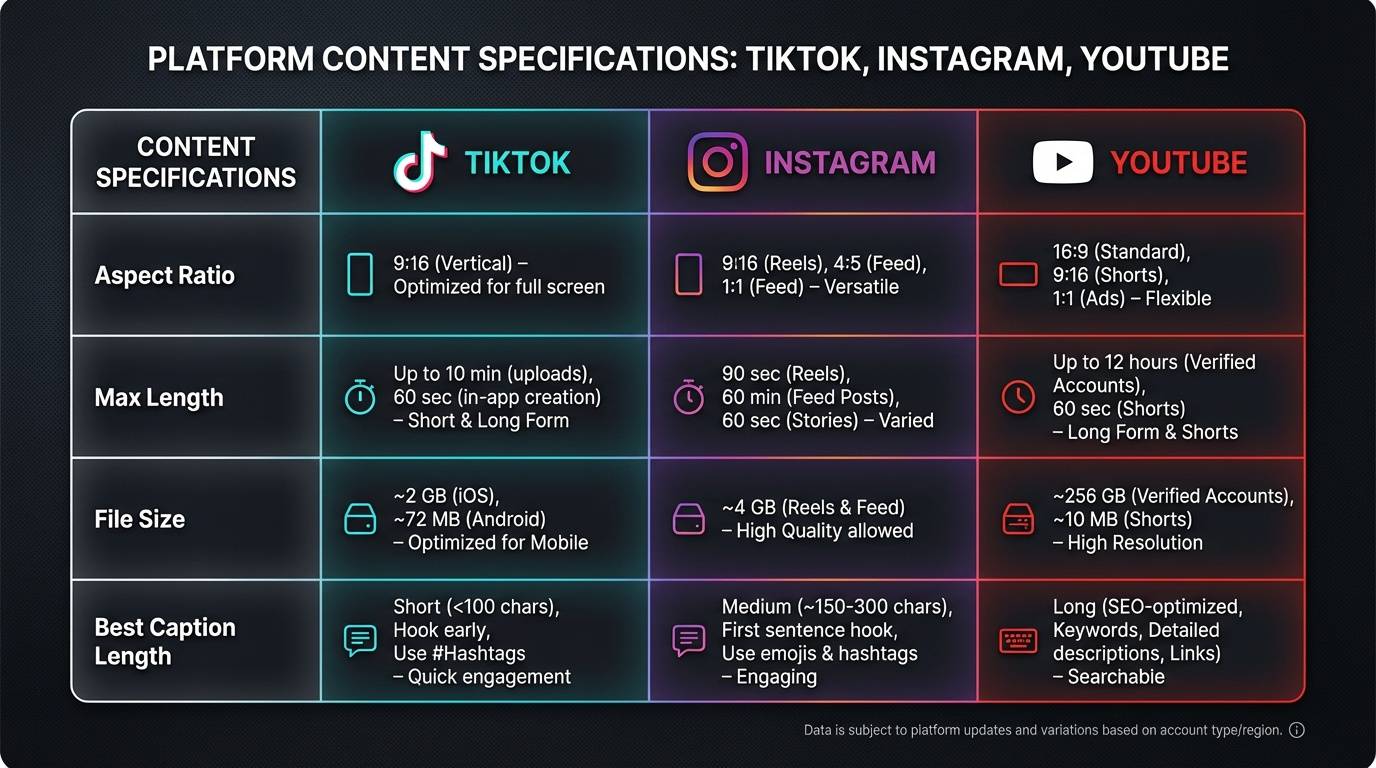
Step 3: Adapt for Each Platform. Don't just copy-paste-adapt. Adjust aspect ratios (9:16 vertical for TikTok/Instagram Reels, 16:9 horizontal for YouTube, 1:1 square for LinkedIn). Rewrite captions for each platform's culture-casual and trending for TikTok, aesthetic and aspirational for Instagram, professional and insightful for LinkedIn. Add platform-specific elements like trending sounds on TikTok, hashtags on Instagram, professional context on LinkedIn.
Step 4: Distribute & Track. Post adapted content to all your platforms according to each platform's optimal frequency. Track what performs where using platform analytics. You'll quickly learn which content types work best on which platforms. Some content will crush on TikTok but flop on LinkedIn-that's expected. Learn the patterns and optimize future content accordingly.
Master Content: 15-minute YouTube Video
Total: 1 video → 18 pieces of content
For SaaS founders, e-commerce brands, and agencies who want to drive organic marketing growth instead of burning money on paid ads, tools like Renderfire automate the full workflow: creation, distribution, and conversion. Connect your product, generate platform-optimized organic content (hook+demo videos for TikTok and Instagram, faceless YouTube videos, TikTok slideshows, UGC videos, ads), and auto-publish to your social networks. Learn how to make slideshow on TikTok, create faceless videos at scale, and drive traffic to your website while you focus on your business.
You don't need to be on every platform. Start with 2, master them, then expand. Your priority depends on your business model and target audience.
Most creators fail at multi-platform distribution because they spread too thin. They try to post on TikTok, Instagram, YouTube, LinkedIn, Twitter, and Pinterest simultaneously-then burn out within weeks. The smart approach is starting with two platforms maximum, proving your content works there, then gradually expanding.
For B2C / Entertainment Focus: Start with TikTok as your primary growth engine for reaching new audiences. TikTok's algorithm is the most democratic and offers the fastest path to your first 10K followers. Use Instagram as secondary for community building and monetization-once people discover you on TikTok, Instagram is where they deepen their relationship with your brand. Add YouTube if time allows for authority building and long-form content that ranks in search.
For B2B / Professional Focus: Start with LinkedIn as primary-that's where your target audience spends their professional time. LinkedIn is best for reaching decision-makers and building credibility in professional spaces. Use YouTube as secondary for authority building and thought leadership through educational content. Add Instagram if time allows for visual storytelling and brand presence, though it's less critical for B2B.
The key is proving your content model works on two platforms before expanding. Once you're generating consistent views and engagement on two platforms, and the content creation process feels sustainable, then consider adding a third. But two well-executed platforms beat five half-hearted ones every time.
Avoid these common pitfalls that undermine multi-platform success. Quality and adaptation beat volume every time.
Track the right metrics to understand which platforms deserve more focus and which aren't worth your time. Data drives smart decisions.
Growth Metrics: Track combined follower growth across all platforms and platform-specific growth rates. Which platform is growing fastest? That indicates where your content resonates most or where the algorithm favors you. Don't just look at total follower counts-track growth velocity and engagement rate per platform.
Engagement Metrics: Monitor total engagement (likes, comments, shares, saves) and engagement rate by platform. A platform with fewer followers but higher engagement rate is often more valuable than one with high followers but low engagement. Engagement indicates true audience interest and drives algorithmic distribution.
Efficiency Metrics: Calculate content ROI by measuring views/reach per hour spent creating content. Calculate platform ROI by comparing time invested per platform against results generated. Some platforms might require double the time for half the results-that's valuable data for where to invest your energy.
Business Metrics: Track website traffic by platform using UTM parameters (yoursite.com?utm_source=tiktok). Monitor email signups by source. Measure revenue by platform if you're selling products or services. The platform driving the most traffic or revenue deserves the most attention, even if it's not the one with the most followers or engagement.
Monthly Review Questions: Which platform should we double down on by increasing frequency? Which platform isn't worth the time and should be decreased or paused? What content formats work best where-should we replicate winning formats across platforms or keep them platform-specific?
Use this data to continuously optimize your platform mix. The goal isn't being on every platform-it's being on the right platforms for your audience and business model.
Start with 2 platforms maximum. For B2C businesses, start with TikTok (growth engine) and Instagram (community building). For B2B, start with LinkedIn (professional credibility) and YouTube (authority). Master these before adding more—two well-executed platforms beat five half-hearted ones.
No—adapt, don't duplicate. Each platform has different culture, aspect ratios, and audience expectations. Use the same core content but adjust captions for platform culture (casual for TikTok, professional for LinkedIn), optimize aspect ratios, and add platform-specific elements like trending sounds on TikTok.
Track both efficiency metrics (views per hour spent) and business metrics (traffic and conversions by platform using UTM parameters). A platform with fewer followers but higher conversion rate may be more valuable than one with high followers and low engagement. Let data guide where you invest your time.
Multi-platform distribution is about working smarter, not harder. Start with 2 platforms, adapt don't duplicate, and track everything. Quality first, quantity second—bad content on 5 platforms is worse than great content on 2. For platform-specific guidance, see our TikTok, Instagram, and YouTube best practices guides.