YouTube SEO & Best Practices
Master YouTube algorithm, SEO optimization, and thumbnail design.
7 min
Loading...
Ready to start automating?
Join hundreds businesses growing with Renderfire
Master YouTube algorithm, SEO optimization, and thumbnail design.
Join hundreds businesses growing with Renderfire
YouTube is a search engine first—optimize titles, descriptions, and thumbnails for discoverability. Focus on 8-12 minute videos for ad revenue, with the first 15 seconds hooking viewers and promising value. Post 2-3 times weekly on Tuesday-Thursday, and use Shorts (1-3 daily) to drive traffic to long-form content. Watch time matters more than views.
YouTube rewards search-optimized, high-retention content that keeps viewers on the platform. Master SEO, thumbnails, and long-form content strategy to build a sustainable channel.
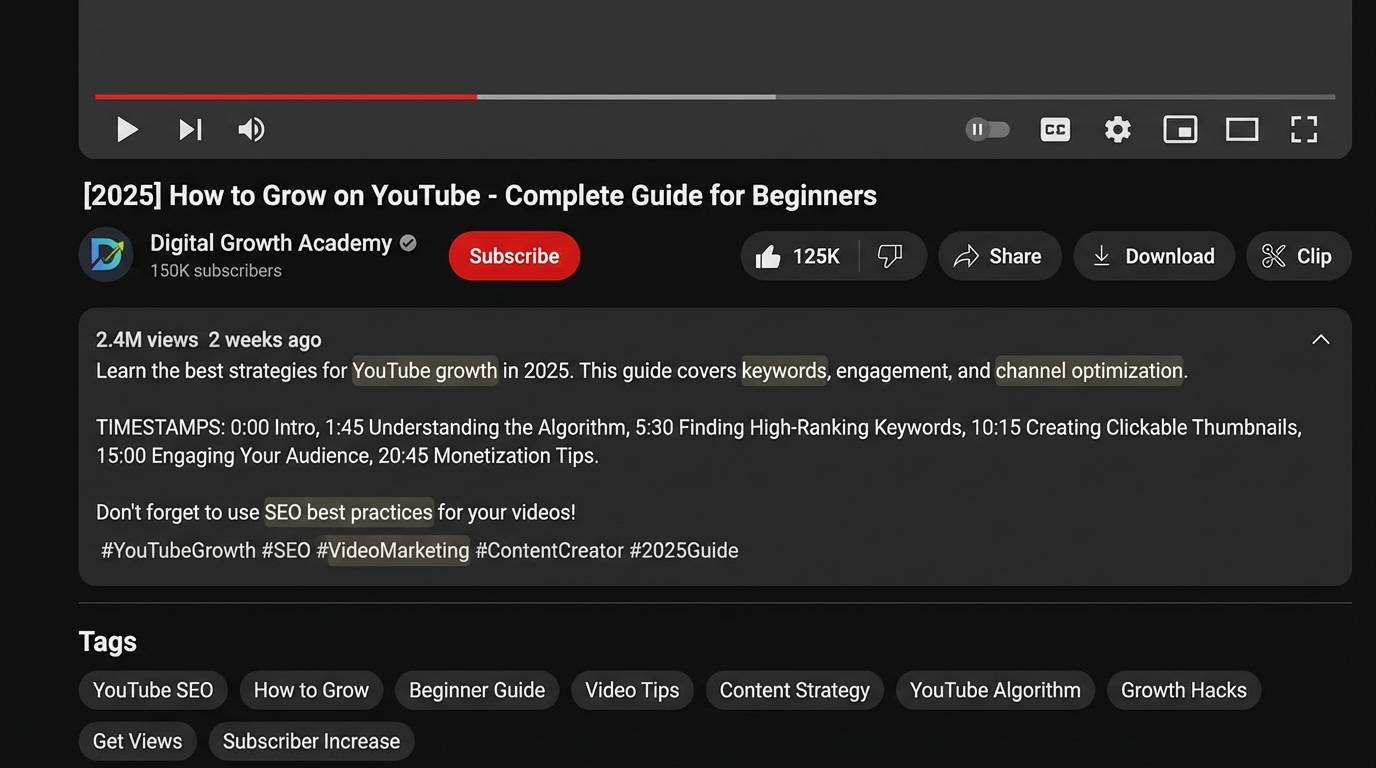
Understanding what makes YouTube unique is essential for success. Unlike other platforms, YouTube combines search engine optimization with entertainment, requiring a different strategic approach.
Search-Driven Discovery makes YouTube the second largest search engine. Unlike social platforms where content primarily reaches existing followers, YouTube content gets discovered through search for months or years after posting. Optimizing titles, descriptions, and tags for search is essential. A well-optimized video can generate views indefinitely through search traffic.
Long-Form Content allows viewers to expect depth and value. YouTube audiences come for comprehensive content, not quick entertainment. While Shorts exist, the platform's core strength is long-form video (8+ minutes). Viewers tolerate and even prefer longer videos that thoroughly cover topics. This fundamentally different from TikTok or Instagram where brevity wins.
Watch Time Matters more than views. The algorithm favors videos that keep people on the platform longer. A 15-minute video with 70% retention (viewers watching 10.5 minutes average) outperforms a 5-minute video with 90% retention (4.5 minutes watched). Total watch time drives recommendations more than completion percentage.
Subscribe Culture creates loyal subscriber bases. YouTube emphasizes building subscribers who return for every upload. Unlike other platforms where most views come from non-followers, YouTube subscribers form your core audience. They get notifications when you post and reliably provide initial engagement that signals quality to the algorithm.
These video formats consistently perform well on YouTube because they tap into fundamental viewer psychology and create immediate curiosity.
"I tried [challenge] for [time period]"
Works because: Curiosity + Relatability + Transformation. Viewers want to see the journey and results without committing the time themselves. The time constraint creates a clear narrative arc with a defined endpoint.
"Why everyone is wrong about [topic]"
Works because: Controversy + Education + Validation. Challenges conventional wisdom to create debate. Viewers who agree feel validated, those who disagree want to see your reasoning. Either way, they watch and engage.
"Reacting to [popular content]"
Works because: Authority + Entertainment + Trending. Piggybacks on existing popular content while adding your unique expertise or perspective. Viewers already interested in the original content discover you through association.
Key Optimization: Title should be 60-70 characters with front-loaded keywords. Thumbnail needs high contrast, clear text (3-5 words), and emotional expression. First 30 seconds must deliver a hook + value promise. Target 8-15 minutes for maximum ad revenue.
Your content length and structure should match your audience's expectations and your video's value proposition. Different formats serve different purposes.
Shorts (15-60 seconds) operate on a separate algorithm. YouTube Shorts compete with TikTok and Instagram Reels. They have their own dedicated feed and recommendation system. Great for discovery and driving traffic to your long-form content. However, Shorts subscribers don't always convert to long-form viewers-treat Shorts as a discovery funnel, not your main content.
Standard Content (8-12 minutes) is optimal for ads and engagement. The 8-minute mark unlocks mid-roll ads (additional revenue opportunity). This length is long enough to provide substantial value but short enough to maintain strong retention rates. Most successful YouTube channels focus on this sweet spot for their regular content.
In-Depth Tutorials (15-30 minutes) work when value justifies the length. Comprehensive tutorials, detailed analyses, and thorough explanations can justify longer runtimes. Viewers seeking specific information will watch 30+ minute videos if the content delivers. The key is ensuring every minute adds value-padding for length destroys retention.
Live Streams (30+ minutes) create different engagement patterns. Live streams build community through real-time interaction. Different algorithm treatment-discovery happens during the stream and through notifications, not as much through search. Excellent for deepening relationships with existing subscribers but less effective for growing new audiences.
First 15 seconds hook with your video's main benefit. Show the final result or most exciting moment upfront. Tell viewers exactly what they'll learn in concrete terms: "By the end of this video, you'll know how to..." Create curiosity about how you achieved the result. Use pattern interrupts-unexpected visuals or statements that grab attention. The first 15 seconds determine whether viewers commit to watching or click away.
Middle section (80% of video) delivers on your promise. Structure content logically with clear progression-viewers should feel like they're making progress toward the promised outcome. Include B-roll footage and graphics to maintain visual interest and explain complex concepts. Use pattern interrupts every 30-60 seconds: transitions, perspective changes, examples, or brief tangents that reset attention. Demonstrate rather than just explain whenever possible-show the process, don't just talk about it.
Last 20 seconds recap main points and drive action. Briefly summarize the key takeaways to reinforce learning. Include clear call-to-action: subscribe, watch next video, click link in description. Add end screens (last 20 seconds) with suggested videos to keep viewers on your channel. The goal is viewer retention on your channel-keep them watching your content, not clicking away to browse.
YouTube is a search engine first and a social platform second. Optimizing your titles, descriptions, and tags is crucial for discoverability and long-term growth.
Keep titles 60-70 characters for full visibility. Longer titles get cut off in search results and suggested videos. Every character counts-make them all work for you. Titles should be fully visible on mobile devices where most viewing happens.
Front-load keywords-put main keyword in first 3 words. "TikTok Growth Strategy 2024" starts with the main keyword (TikTok Growth Strategy). This helps YouTube understand what your video is about immediately. Later words matter less for search rankings, so prioritize keywords at the start.
Create curiosity with brackets for key benefits [Step-by-Step]. Brackets draw attention and provide additional context: "[Beginner Friendly]" tells novices this video is accessible. "[10 Minutes]" sets time expectations. "[No Equipment]" addresses common objections. Brackets make titles more specific and clickable without increasing character count significantly.
Include numbers-"5 Ways to..." performs well. Numbers set clear expectations (exactly 5 tips, not vague "some tips"). Create structure that viewers can follow mentally ("I'm on tip 3 of 5"). Often more clickable than titles without numbers because they promise concrete, organized information.
Good title example: "TikTok Growth Strategy 2024 [Gain 10K Followers Fast]" - Front-loads keyword (TikTok Growth Strategy), includes year for relevance (2024), uses brackets for specific benefit (Gain 10K Followers Fast), sets clear expectation of what viewer will learn.
Another good example: "YouTube SEO: 7 Proven Tips [Rank #1 in 2024]" - Clear keyword (YouTube SEO), specific number (7 Proven Tips), year for timeliness, bracket emphasizes benefit (Rank #1).
Bad title example: "My thoughts on growing on TikTok and some tips" - Too vague ("some tips" doesn't set expectations), no keywords frontloaded, too conversational for search, no specific benefit or number.
Another bad example: "Some random YouTube advice I want to share today" - No keywords, completely vague about content, no search value, casual language doesn't attract clicks.
Optimize first 2-3 lines of description-most visible without clicking 'show more'. These lines appear in search results and suggested videos. Include your primary keyword naturally. Provide a compelling summary that makes people want to watch. Add your call-to-action or most important link in these first lines for maximum visibility.
Include keywords naturally in first paragraph of description. Don't keyword stuff-write naturally while incorporating relevant terms. YouTube's algorithm is sophisticated enough to detect forced keyword insertion. Describe what viewers will learn using natural language that happens to include your target keywords.
Add timestamps for longer videos to improve user experience and SEO. Timestamps allow viewers to jump to specific sections they care about, improving satisfaction and reducing drop-off. YouTube displays timestamped sections in search results, making your video more attractive. Improves accessibility and signals comprehensive content to the algorithm.
Include relevant links-website, social media, resources. Link to your website, other social platforms, tools mentioned in the video, or related resources. This provides value to viewers and establishes you as a thorough, helpful resource. Always include link in the first 2-3 lines if it's your primary CTA.
Use 3-5 hashtags maximum-don't overdo hashtag usage. Unlike Instagram or TikTok, YouTube doesn't rely heavily on hashtags. Use 3-5 highly relevant hashtags maximum. More than that looks spammy and can actually hurt your video's performance. Focus on quality over quantity.
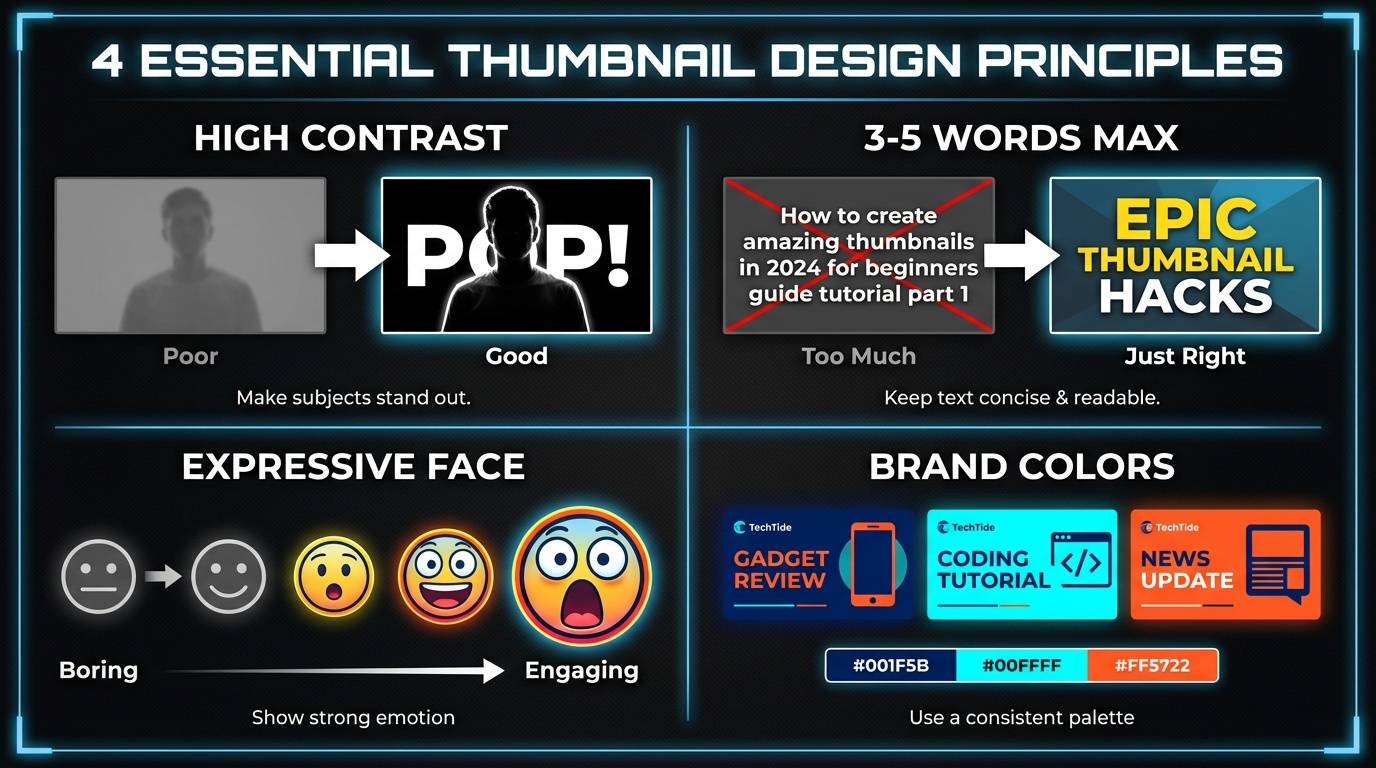
Your thumbnail is the first impression viewers have of your content. A well-designed thumbnail can dramatically improve your click-through rate and overall video performance.
High Contrast stands out in feed with bold colors and clear composition. Bright, contrasting colors grab attention in a sea of thumbnails. Use complementary colors (blue and orange, purple and yellow) for maximum impact. Ensure the focal point (face, product, or key visual) is immediately obvious. Test your thumbnail at small sizes-if you can't identify the subject at thumbnail size, redesign it.
Clear Text uses large, readable font with 3-5 words maximum. Thumbnail text should be legible on mobile devices. Use simple, bold fonts-fancy script fonts are unreadable at small sizes. Limit text to 3-5 words maximum that emphasize the key benefit or create curiosity. High-contrast text (white text on dark background or vice versa) ensures readability.
Emotional Expression-faces with clear emotions perform significantly better. Human faces with obvious emotional expressions (surprise, excitement, concern) outperform thumbnails without faces. Exaggerated expressions work better than subtle ones-thumbnails are small, so subtlety gets lost. The emotion should match the video's content and promise.
Consistent Branding builds visual recognition across your channel. Use consistent color schemes, fonts, and layouts so viewers recognize your content instantly. This builds brand recognition and trust. Subscribers start to identify your thumbnails before even reading titles. Consider creating thumbnail templates to maintain consistency while allowing variation.
Pro Tip: YouTube allows thumbnail changes after upload. Test different versions weekly and track CTR (click-through rate) impact. Keep winning formulas, iterate on losers.
Consistency matters more than volume on YouTube. Choose a posting schedule you can maintain while keeping quality high, and stick to it.
Minimum: 1 video per week for consistency. Weekly uploads maintain algorithmic favor and audience expectations. Less frequent posting makes the algorithm deprioritize your channel. Subscribers forget about you between long gaps. Consistency is absolutely key-better to post reliably every week than sporadically multiple times some weeks and zero others.
Optimal: 2-3 videos per week is the sweet spot for most creators. This frequency provides multiple opportunities for viral growth without sacrificing quality. Allows you to test different content types, topics, and formats. Keeps your channel active in subscribers' feeds and the algorithm's consideration. Most successful mid-size channels post in this range.
Maximum: Daily videos-only if quality doesn't suffer. Daily uploads work for some creators (often with teams) but risk burnout and declining quality for solo creators. The algorithm doesn't inherently favor daily posting over 2-3x weekly if your videos get strong retention and engagement. Only commit to daily if you can sustain it long-term without quality drops.
Tuesday-Thursday: Highest engagement days of the week. These midweek days provide the most consistent, reliable viewership patterns. Monday mornings are slower as people catch up from the weekend. Friday afternoons through Sunday see more variable engagement depending on your niche.
2-4 PM EST: After school/work viewing time. This window catches students finishing school and early work-from-home finishers. Good for educational content targeting professionals or students.
8-10 PM EST: Evening relaxation prime time. Highest overall YouTube usage happens in the evening. People are done with work/school, finished dinner, and settling in for entertainment or learning. Best time for maximum initial views and engagement.
Weekend 10 AM-12 PM: Saturday/Sunday morning viewing. Weekend mornings work well for certain niches (cooking, DIY, hobbies). People have free time and are planning their weekends. Less competition for attention than weekday evenings.
Important: Avoid posting on Monday mornings—people are catching up from the weekend. Weekend content works best for entertainment, while Tuesday-Thursday is ideal for educational content.
The algorithm watches how viewers interact with your content. Strong engagement signals tell YouTube your video is worth recommending to more people.
Track your engagement metrics with our free YouTube Engagement Calculator to understand how your content performs and identify areas for improvement.
Pin a question in comments to encourage discussion from the start. Immediately after posting, pin a thought-provoking question as the first comment. This gives viewers an easy prompt to respond to. Pinned comments get high visibility, encouraging more people to engage. Questions related to the video content drive relevant discussion.
Reply to early comments within first hour after posting. Quick responses to initial comments signal to the algorithm that your video is generating conversation. Doubles your comment count (original + your replies). Encourages more commenting from others who see active discussion. Creates community feeling that makes viewers more likely to return and engage on future videos.
Heart top comments to build community and show appreciation. Hearting comments (giving them a creator heart) acknowledges viewers who add value to discussions. Encourages quality comments over low-effort ones. Makes engaged viewers feel recognized and more likely to comment again. Highlights particularly insightful or helpful comments for other viewers.
Create comment-driven content-videos responding to "You asked for...". When viewers leave questions or requests in comments, create videos addressing them. This shows you listen to your audience, drives engagement from those who made requests, and creates natural content ideas from proven demand. Always reference the original comment/commenter in your new video to close the loop.
Post 2-3x per week between videos to maintain presence. The Community tab lets you stay visible between video uploads. Share updates, behind-the-scenes content, or questions. Keeps your channel top-of-mind for subscribers even when you're not posting videos.
Use polls to guide content decisions and boost engagement. Polls require minimal effort from viewers (just click an option) yet count as strong engagement. Use polls to ask what content they want next, gather opinions on topics, or just create interactive touchpoints. Share poll results in future content to show you listen.
Share behind-the-scenes content to build connection. Community posts work great for showing your process, workspace, challenges, or personal updates. Builds parasocial relationships that increase loyalty and watch time. Humanizes you beyond polished video content.
Tease upcoming videos to build anticipation. Share thumbnail drafts, topic announcements, or production updates for upcoming videos. Creates excitement and improves initial performance when the video drops. Subscribers who see the tease are more likely to watch immediately upon upload.
Shorts operate on a separate algorithm from long-form content. Use them strategically to drive traffic to your main channel and grow your subscriber base.
Separate Algorithm means Shorts have their own recommendation system. Shorts don't compete with or cannibalize long-form content-different feed, different algorithm. You can post Shorts daily without affecting your long-form performance. However, Shorts subscribers don't always convert to long-form viewers, so don't rely solely on Shorts for growth.
Vertical Format Required-9:16 aspect ratio is mandatory. Shorts must be vertical (phone orientation) to appear in the Shorts feed. Horizontal or square videos won't qualify as Shorts. Maximum 60 seconds length. No mid-roll ads (monetization is different from long-form).
Drive Traffic to Long-Form by using Shorts to promote your main content. End Shorts with a verbal CTA: "Watch the full tutorial on my channel" or "Link to full video in comments." Use Shorts to tease long-form content-show the result, tell viewers to watch the full video to learn how. Pin a comment linking to the related long-form video. Shorts excel at discovery; long-form excels at watch time and revenue.
Post 1-3 Daily-doesn't cannibalize long-form content. Frequent Short posting is safe because it operates independently from long-form. Multiple daily Shorts provide more discovery opportunities without oversaturating your audience. Each Short is essentially a new chance for someone to discover your channel and check out your long-form content.
Use Shorts to drive traffic to long-form content. Include CTAs pointing viewers to your full videos: "Full tutorial on my channel," "Watch the extended version," or "Link in comments." This leverages Shorts' discovery power to fuel long-form growth.
Include CTA to subscribe-Shorts are great for converting casual viewers. People who enjoy a 60-second Short might not commit to a 20-minute video immediately but will subscribe to see more Shorts. Over time, some convert to long-form viewers. Every subscriber increases your total reach.
Leverage trending sounds and formats. The Shorts algorithm rewards participation in trends similar to TikTok. Using trending sounds or formats gets your content grouped with other trending Shorts, increasing distribution. Stay current with Short trends in your niche.
Post 1-3 Shorts daily for maximum discovery. High frequency works for Shorts because they don't require the production time of long-form content. More Shorts equals more discovery opportunities. Track which Short topics drive the most subscribers and create more in those categories.
YouTube growth is typically slower than other platforms but more sustainable. Most channels see meaningful growth after 6-12 months of consistent posting (2-3 videos weekly). YouTube's search-based discovery means videos can generate views for years after posting, unlike TikTok or Instagram where content has a shorter lifespan.
Use both strategically. Long-form content (8-12 minutes) is your main revenue and subscriber driver—it generates more watch time and ad revenue. Shorts are a discovery tool that can drive traffic to your long-form content. Post 1-3 Shorts daily to fuel discovery, while maintaining 2-3 long-form videos weekly.
Watch time is more important. YouTube's algorithm prioritizes total watch time over view count. A 15-minute video with 70% retention (10.5 min watched) outperforms a 5-minute video with 90% retention (4.5 min watched). Focus on creating content that keeps viewers watching longer, not just content that gets clicked.