Troubleshooting: 0 Views Fix
Fix common causes of zero views and recover from shadowbans.
12 min
Loading...
Ready to start automating?
Join hundreds businesses growing with Renderfire
Fix common causes of zero views and recover from shadowbans.
Join hundreds businesses growing with Renderfire
Getting 0-100 views per video usually means your account is shadowbanned or lacks algorithm trust. This lesson walks through the 6 most common causes—from skipped warmup to weak hooks—and exactly how to diagnose and fix each one. Most accounts recover within 2-4 weeks with the right approach.
If you're consistently getting 0-100 views, your account is likely shadowbanned or the algorithm doesn't trust you yet. Don't keep posting—fix the root cause first or you're wasting effort. This guide walks through the most common causes and exactly how to diagnose and fix each one systematically.
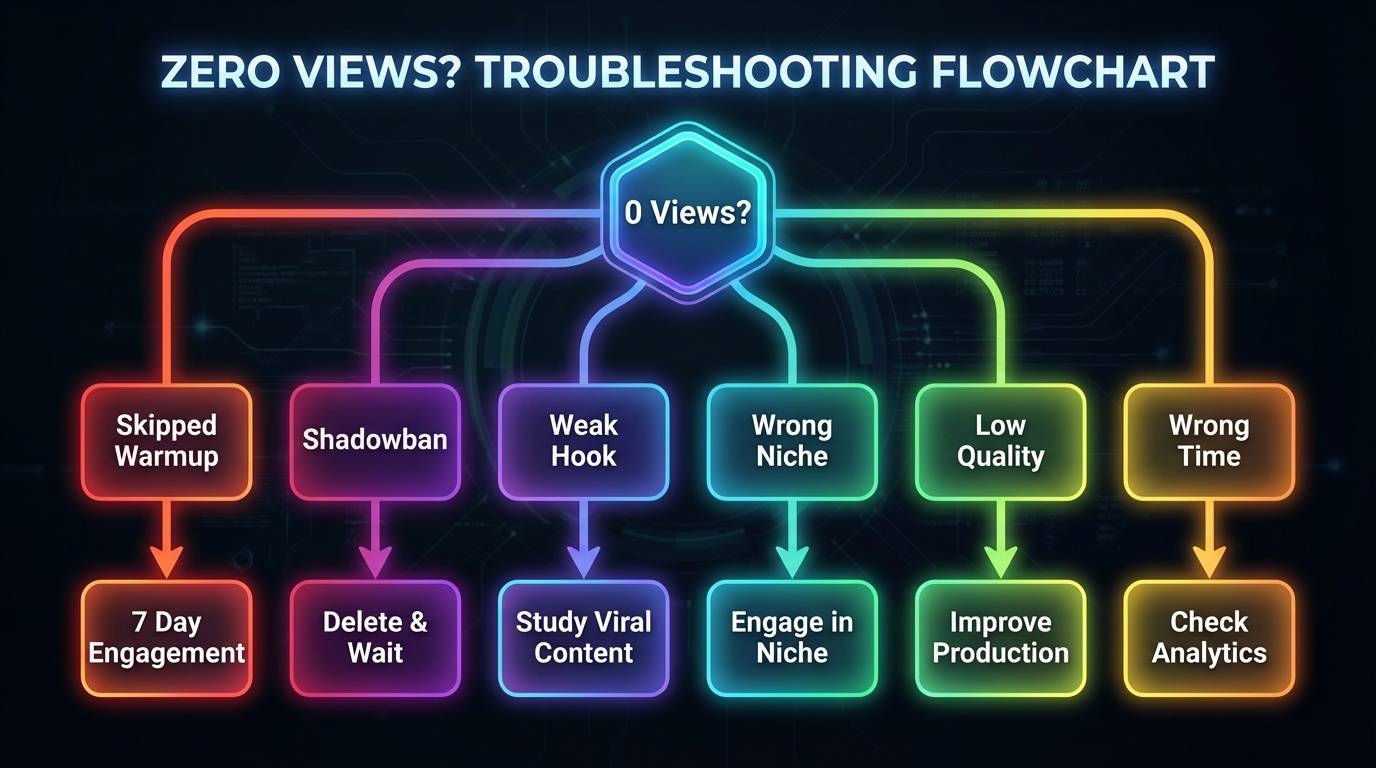
The #1 reason new accounts get zero views: you posted too soon without building algorithm trust first.
If you created your account and immediately started posting, the algorithm flagged you as suspicious. New accounts that blast content look like bots designed to spam. The platform's default response is limiting your reach until you prove you're a real person providing value.
Your account is less than 2 weeks old. You started posting within the first day or two of creation. You've been posting daily but views haven't improved. This is classic "didn't warm up" behavior.
Stop posting immediately for 7 days minimum. Spend 20-30 minutes daily just engaging-watch videos in your niche, like relevant content, leave genuine comments (not "great video!" spam), follow accounts similar to what you plan to create, and save videos you find valuable. This mimics normal user behavior and builds algorithm trust.
After 7 days of pure engagement, post your first high-quality video. Make it exceptional-this is your reintroduction to the algorithm. If this video gets at least 300-500 views, you've recovered. Continue posting 1x daily and monitor performance. If you're still stuck at under 100 views after another week of good behavior, you may need to start fresh with a new account (following proper warmup this time).
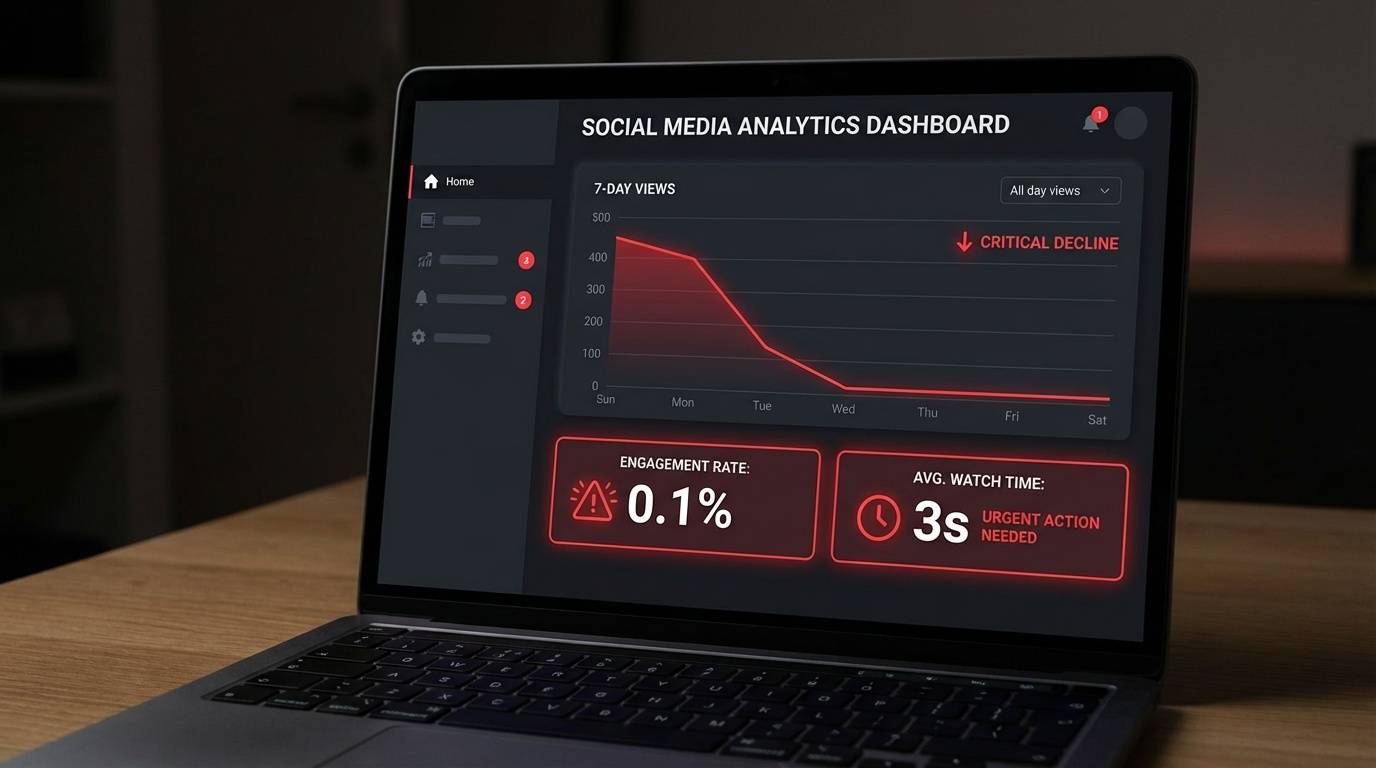
You may have violated community guidelines—even unintentionally—and the algorithm suppressed your reach as punishment.
Shadowbans happen when platforms detect content that violates their rules but isn't severe enough for an outright ban. Instead, they silently limit your distribution. You can post, but almost nobody sees it. The insidious part is platforms rarely notify you—you just stop getting views.
Copyrighted music or video footage (using songs not in the platform's library, screen recordings from movies/shows). Sexual or suggestive content beyond platform limits (even if it seems mild to you). Violence or graphic content. Misinformation or misleading claims. Spam behavior like follow/unfollow tactics or engagement pods. Using banned hashtags or participating in restricted challenges.
You were getting decent views (500+), then suddenly dropped to under 100. You received a community guidelines warning or violation notice (check notifications and email). Your content doesn't appear when you search for your own hashtags in incognito mode. Other accounts with similar content and follower counts get 10x your views.
Delete or archive any content that might have triggered the ban-go through your last 10-20 posts and remove anything even remotely questionable. Stop posting for 14 days to let the algorithm reset its perception of your account. When you resume, post ultra-safe, high-quality content that clearly follows guidelines. Post only 1x every 2-3 days initially rather than daily. Monitor whether performance improves over the next 4 weeks of good behavior.
If you're still suppressed after 30 days of perfect behavior, the shadowban may be permanent. At that point, starting fresh with a new account (and never making the same mistakes) is often more efficient than trying to recover a permanently flagged account. For guidance on managing multiple accounts properly, see our guide on building a TikTok and Instagram content farm.
The algorithm tests every video by showing it to a small audience first. If those viewers immediately scroll away, distribution stops.
Your first 3 seconds determine everything. Platforms measure how quickly viewers scroll past your content. If 80% of test viewers scroll away in the first second, the algorithm concludes your content is boring and stops showing it. The video dies with under 100 views not because the algorithm is against you, but because real viewers weren't interested.
Your average watch time is under 20% (check analytics). Views stall within the first hour after posting. People who do watch tend to watch all the way through, but not enough people start watching. Your content is fine mid-video, but the hook doesn't grab attention.
Bold statements that create curiosity ("This changed everything for my business..."). Questions that directly address pain points ("What if I told you this one mistake costs 80% of your views?"). Pattern interrupts—unexpected visuals, sounds, or actions that stop the scroll. Shocking facts or statistics delivered with confidence. Direct address to viewer's specific situation ("If you're struggling with low views, watch this").
Slow intros ("Hey guys, welcome back..." wastes 3 seconds). Generic openings that don't create curiosity. Starting with explanations before grabbing attention. Weak or quiet audio in the first second. Static opening visuals that don't create pattern interrupt.
Rewatch your last 10 videos—would YOU stop scrolling in the first 3 seconds? Be brutally honest. Study viral videos in your niche-how do they hook viewers instantly? Test 3-5 different hook styles in your next videos: question hooks, statement hooks, pattern interrupt hooks, fact hooks. Track which style gets the best 3-second retention. Double down on your winning hook style and iterate from there.
The algorithm doesn't know who to show your content to because you haven't established a clear niche through your engagement behavior.
Platforms use your engagement patterns to understand what your content is about and who would be interested. If you don't engage with content in your niche before posting, the algorithm has no data about where you fit. It shows your content to random people who aren't interested, gets poor engagement, and stops distribution.
You started posting without engaging with other creators in your niche first. Your For You Page doesn't show content similar to what you create. You haven't followed, liked, or commented on relevant accounts. The views you do get come from random, unrelated niches.
Temporarily pause posting (3-5 days). Spend 30 minutes daily consuming and engaging with content in your exact niche-if you create fitness content, watch fitness creators, if you create marketing tips, engage with marketing accounts. Search for keywords related to your content and engage with top posts. Follow 20-30 accounts that post content similar to yours. Like and save videos you'd want your content shown alongside. Leave genuine, valuable comments on 5-10 posts daily.
This trains the algorithm on your niche. Within 3-5 days, your For You Page should primarily show content similar to what you want to create. That's the signal you've successfully taught the algorithm your niche. Now when you post, the algorithm knows exactly who to show your content to-people who watch similar content.
Resume posting, but continue the engagement habits. Spending 15 minutes daily engaging with your niche keeps the algorithm calibrated and helps you stay current with trends and successful formats in your space.
You don't need Hollywood budgets, but viewers DO need to hear you clearly and see you well enough. Basic production standards matter.
Platforms reward watch time. If your audio is too quiet, unclear, or distorted, viewers leave. If your lighting is so dark they can barely see you, viewers leave. These technical issues cause viewers to scroll away not because your content is bad, but because consuming it is difficult. The algorithm interprets this as low-quality content and stops distributing it.
Clear, audible audio (viewers can easily hear you without maxing volume). Decent lighting (your face is visible, not silhouetted or dark). Stable footage (not shaky, dizzying, or making viewers nauseated). Clear framing (subject is centered and visible, not cut off). Captions or text overlays (many watch muted, so on-screen text is critical).
Expensive cameras (modern phones are fine). Professional lighting setups (natural window light or a $20 ring light works). Editing software (free tools like CapCut are perfect). Complex transitions or effects. Perfect color grading.
Record during daytime near a window for natural lighting, or invest $15-30 in a basic ring light. Use your phone's microphone but record in a quiet room, or buy a $25 lavalier mic that clips to your shirt. Enable phone stabilization or use a $10 phone tripod. Add captions using CapCut, TikTok's built-in tool, or similar free options. Watch your video back before posting-if YOU wouldn't watch it due to technical issues, your audience won't either.
If you post when your target audience is asleep or offline, initial engagement will be low, signaling to the algorithm that your content isn't interesting.
The first hour after posting is critical. The algorithm shows your content to a small test audience and measures engagement. If you post at 3 AM when your audience is asleep, that test audience might not even see your content before the algorithm evaluates it. Low initial engagement kills distribution before your content ever had a fair shot.
Morning commute: 6-10 AM (people scrolling on transit or before work). Lunch break: 12-1 PM (quick social media checks during midday break). Evening: 7-9 PM (highest engagement—people relaxing after dinner, prime scrolling time).
Check your analytics to see when your followers are most active. Test posting at different times over 2 weeks-post at 7 AM one day, 1 PM another day, 8 PM another day. Track which time slots generate the best engagement in the first hour. Once you identify your top 2-3 time slots, consistently post during those windows. Time zone matters-if your audience is primarily in one region, optimize for their timezone, not yours.
Note that different platforms and niches have different optimal times. B2B professional content might perform better at 8 AM on weekdays. Entertainment content might peak at 9 PM on weekends. Test systematically and let data guide your schedule.
If you've tried everything and still can't break past 100 views, follow this systematic recovery plan.
Stop posting entirely. Review your last 20 posts-identify any content that might have violated guidelines and delete it. Study your analytics to understand where viewers drop off. Research what's currently working in your niche by watching top creators. Take notes on their hooks, formats, and engagement tactics.
Spend 30-45 minutes daily engaging heavily with your niche. Watch full videos from start to finish (signals quality content to algorithm). Leave thoughtful comments that add value. Follow and engage with accounts similar to yours. Save videos you find particularly valuable. Your For You Page should transform to primarily show your niche content by end of week.
Create your absolute best piece of content—exceptional hook, great production, valuable information. Post it at your identified optimal time. Engage with every comment within the first hour (this signals quality to the algorithm). Monitor performance closely over 48 hours. If it gets 300+ views, you're recovering. If it still gets under 100 views, continue to Week 4.
If Week 3's post improved but still underperformed, continue posting 1x every 2-3 days with your best content. If there was zero improvement after 3 weeks of good behavior, your account may be permanently suppressed. At this point, creating a new account with proper warmup procedures is often more efficient than continuing to fight a flagged account.
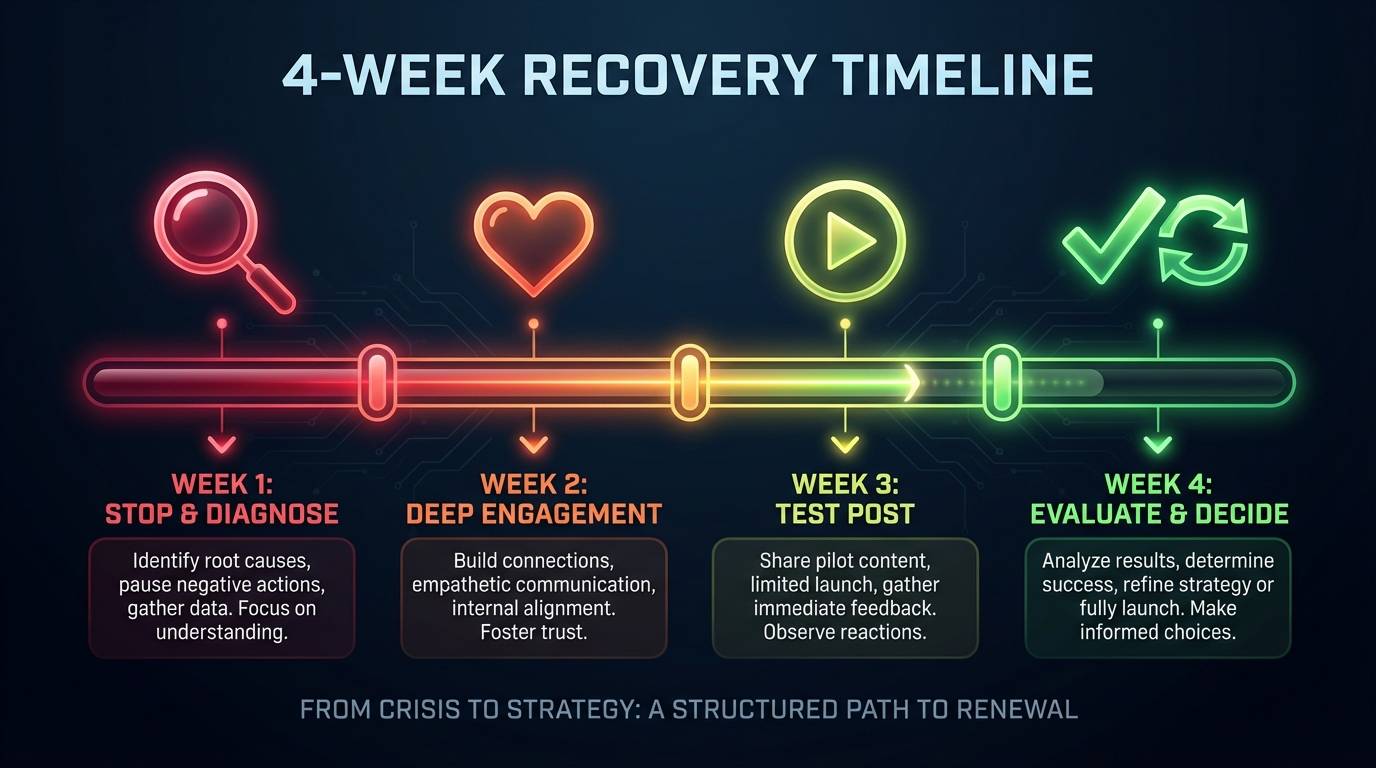
Most accounts can recover within 2-4 weeks if you follow a systematic approach: 1-2 weeks of proper warmup behavior, then gradually reintroducing content. Permanently shadowbanned accounts may never recover, in which case starting fresh is more efficient.
Only delete videos that may have violated community guidelines. Removing low-performing but rule-compliant content doesn't help—the algorithm doesn't penalize you for old videos. Focus on creating better new content rather than pruning old posts.
Try the 4-week recovery protocol first. If you see zero improvement after 30 days of perfect behavior, your account is likely permanently flagged. At that point, creating a new account with proper warmup from day one is usually more efficient than continuing to fight a suppressed account.
Getting zero views is fixable in most cases. Identify the root cause, fix it systematically, and give the algorithm time to rebuild trust in your account. Don't keep blindly posting—diagnose first, fix the issue, then resume with better content and strategy. For platform-specific tips, check out our TikTok Best Practices guide.