Campaign Setup & Testing
Set up campaigns correctly and test systematically for best results.
7 min
Loading...
Ready to start automating?
Join hundreds businesses growing with Renderfire
Set up campaigns correctly and test systematically for best results.
Join hundreds businesses growing with Renderfire
Define SMART objectives before creating content. Spend weeks 1-2 testing 3-5 formats without optimizing, then weeks 3-4 doubling down on the top 2. A/B test ONE variable at a time—hooks, posting times, or lengths. Track metrics that match your objectives: reach for awareness, engagement for interest, conversions for business outcomes. Give yourself 30 days minimum to gather meaningful data.
Proper campaign setup and systematic testing are the foundation of optimization. Most creators launch campaigns without clear objectives, tracking systems, or testing strategies. They post randomly, hope for the best, and wonder why results are inconsistent. Systematic setup and testing create predictable, scalable results.
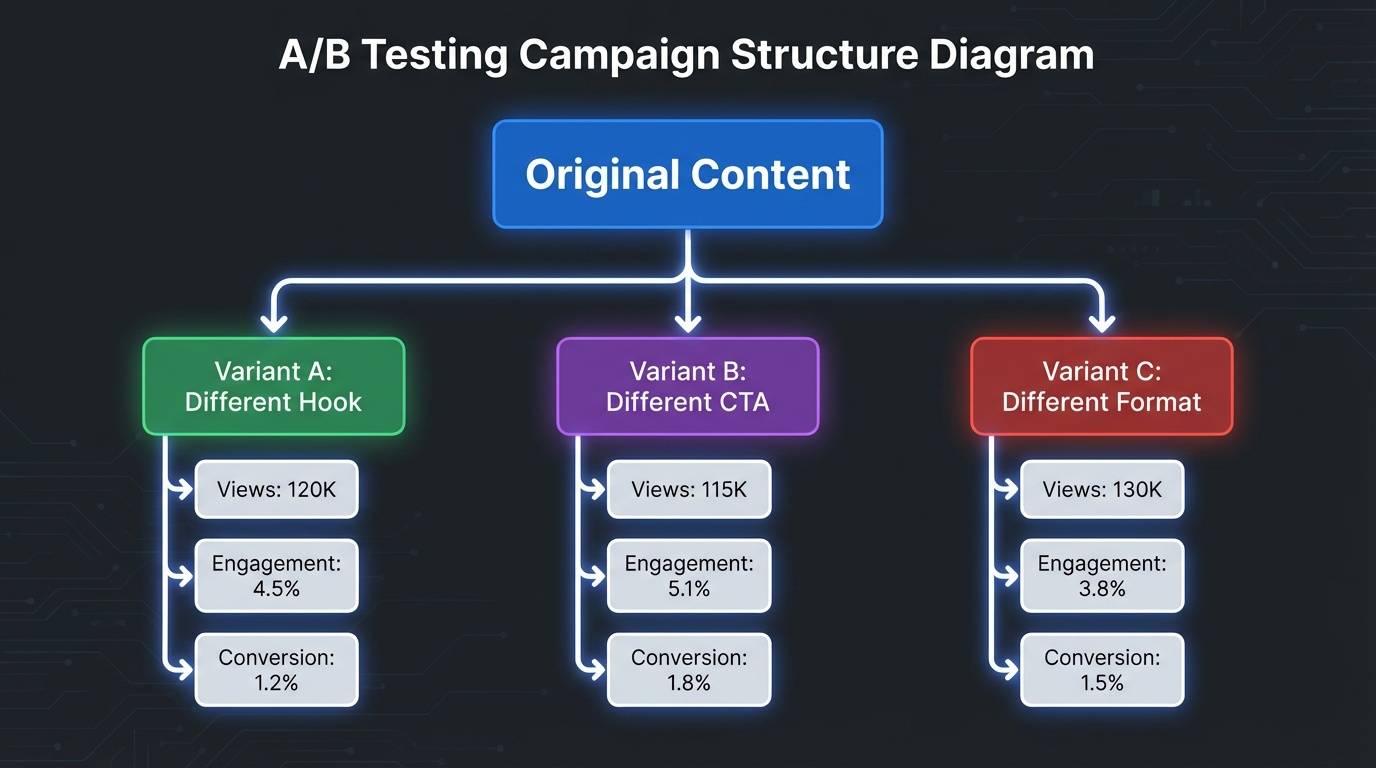
Before creating any content, establish specific, measurable goals. Vague objectives lead to wasted effort and unclear results.
Good objectives are specific and measurable: "Gain 1,000 new followers in 30 days" tells you exactly what success looks like and when to measure it. "Generate 500 app downloads this month" gives you a clear target to hit. "Achieve 100K total views across all content" provides a concrete milestone. "Drive 50 email signups from link in bio" directly ties content to business outcomes.
Bad objectives are vague and unmeasurable: "Get more views" doesn't specify how many or by when. "Grow my account" provides no target or timeline. "Make money somehow" has no clear path or milestone. These vague goals make it impossible to know if you're succeeding or what to optimize.
The SMART framework helps create effective objectives: Specific (exactly what you want), Measurable (can track progress with numbers), Achievable (challenging but realistic), Relevant (aligns with business goals), Time-bound (has a clear deadline). Every campaign objective should pass all five criteria. Understanding your target audience is essential for setting objectives that resonate with the right people.
The first month is about discovery, not optimization. Test systematically, track everything, and identify patterns before doubling down.
Week 1-2: Format Testing Phase. Post 10-15 pieces of content testing 3-5 different formats. Maybe you test tutorials, behind-the-scenes, quick tips, trending audio, and educational carousels. Track engagement for each format but don't optimize yet-you're just gathering baseline data. The goal is understanding what resonates with your audience, not perfecting anything.
Keep everything except format consistent during this phase. Post at similar times, use similar lengths, maintain consistent production quality. This isolation lets you attribute performance differences to format, not other variables. Document every post: format, topic, hook style, performance metrics.
Week 3-4: Doubling Down Phase. Analyze your Week 1-2 data and identify the top 2 performing formats based on your objective metric. If your goal is follower growth, which formats drove the most follows? If it's conversions, which drove link clicks? Create more content in these winning formats while continuing to track patterns.
Start light optimization during this phase. If tutorial-style content performed best, experiment with different tutorial topics or structures. If trending audio worked, try different trending sounds. You're refining what already works rather than starting from scratch. By day 30, you should have clear data on what content types drive your specific objectives.
Resist the urge to optimize immediately. Week 1-2 feels slow because you're not acting on insights yet. That's intentional. You need baseline data to know what "good" looks like for your account. Premature optimization based on 3 data points leads to wrong conclusions. Thirty days minimum provides statistically meaningful patterns.
Track the right metrics from day one. Not all numbers are equally important—focus on metrics that align with your specific objectives.
Reach Metrics (awareness): Views show how many people saw your content. Impressions count total displays (one person can generate multiple impressions). Unique viewers tell you actual audience size. These matter most if your objective is brand awareness or top-of-funnel growth. High reach with low engagement suggests content isn't resonating.
Engagement Metrics (interest): Likes indicate passive approval. Comments show active interest and conversation. Shares/Saves are the strongest signals-people only share content they think reflects well on them, and only save content worth revisiting. Engagement rate (engagements ÷ reach) normalizes these metrics for comparison across different-sized posts. Use our free TikTok Engagement Calculator or Instagram Engagement Calculator to quickly measure your performance.
Growth Metrics (audience building): Follower growth tracks how many people want to see more from you. Profile visits indicate curiosity about who you are. Link clicks show intent to learn more or take action. These metrics matter most if your objective involves building an owned audience or driving traffic.
Conversion Metrics (business outcomes): Link clicks from your bio or content show interest in your offer. App downloads, email signups, or sales are bottom-funnel actions that directly impact your business. If your objective is driving specific business outcomes, these are your north star metrics-everything else is vanity. See our Conversion Funnel Optimization guide for optimizing these metrics.
Match metrics to objectives. If your goal is 1,000 new followers, track follower growth and follow rate (followers gained ÷ profile visits). If your goal is 500 downloads, track link clicks and conversion rate (downloads ÷ clicks). Measuring the wrong metrics makes it impossible to optimize effectively.
Test ONE variable at a time. Testing multiple changes simultaneously makes it impossible to know what actually drove results.
A/B testing isolates variables to identify what works. Create two versions of content that are identical except for one element. Post both and compare performance. The difference in results tells you the impact of that specific change.
Hook Testing: Create the same video with two different hooks-one question-based ("Are you making this mistake?"), one statement-based ("This changed everything"). Keep everything else identical: same content, same length, same posting time, same day of week. Whichever hook generates better 3-second retention becomes your default style.
Posting Time Testing: Post the exact same content at different times. Morning (7-9 AM), lunch (12-1 PM), evening (7-9 PM). Track which time slot generates the best engagement in the first hour. This reveals when your specific audience is most active-which varies by niche and geography.
Length Testing: Create 15-second, 30-second, and 60-second versions covering the same topic. Measure completion rates and engagement. Shorter isn't always better-sometimes audiences want depth. The optimal length depends on your content type and audience expectations. Let data decide, not assumptions.
Thumbnail Testing (YouTube): Create 2-3 different thumbnail designs for the same video. Use YouTube's A/B testing feature or upload as unlisted, test with small audiences, then make the winner public. Track click-through rate. Thumbnails often matter more than titles for YouTube success-they're your first (and sometimes only) chance to grab attention.
Format & Hook Testing at Scale: Testing multiple hook styles or content formats traditionally requires filming each variation separately. For businesses building organic marketing reach, the best AI video generator for TikTok like Renderfire lets you connect your product and generate different approaches (hook+demo, TikTok slideshow, UGC video, faceless video, AI storytelling) from the same concept-then A/B test to find what converts. Use the TikTok Ads Library to study winning formats.
The key to effective testing is patience. Run tests for at least 48-72 hours before drawing conclusions. One video's performance can be affected by algorithm luck, timing, or random factors. Patterns emerging across multiple tests are reliable; single data points are not.
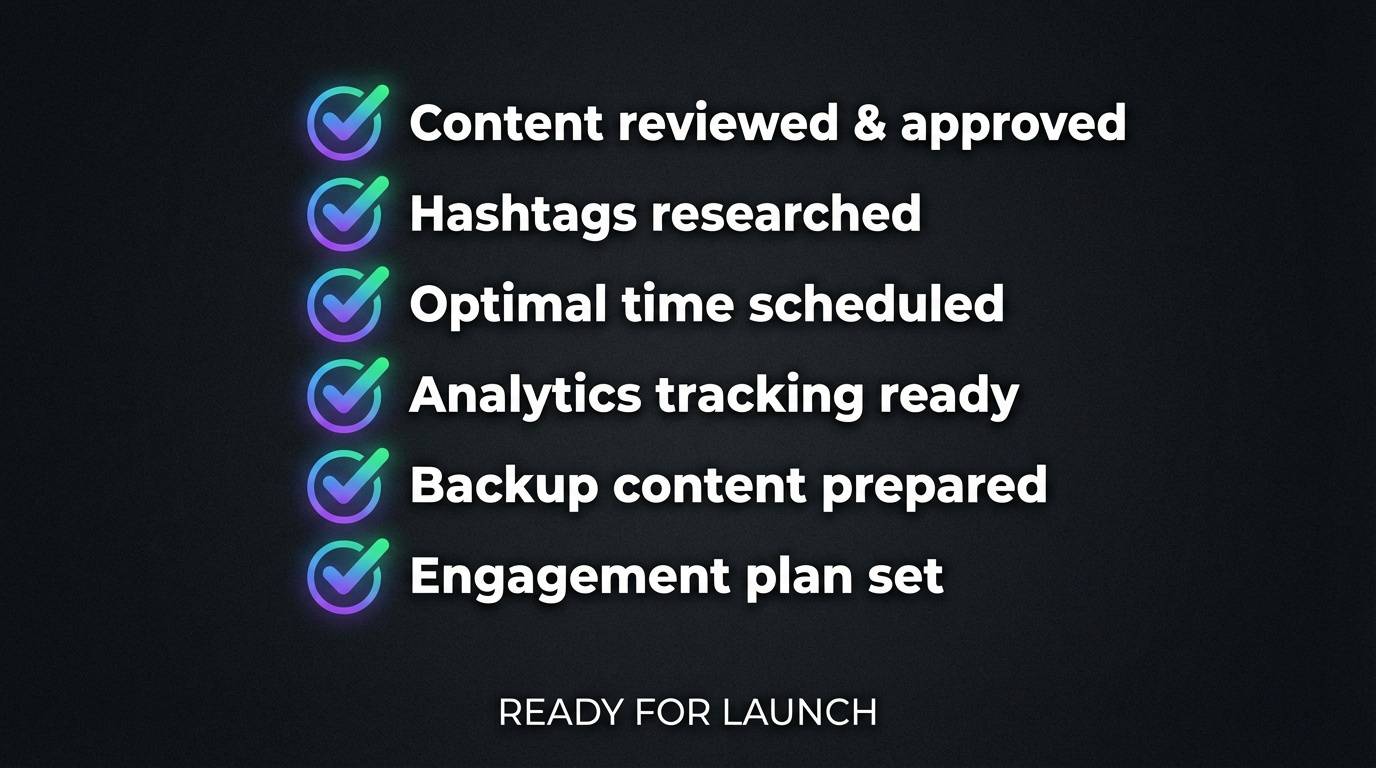
Before launching your campaign, verify all fundamentals are in place. Proper setup determines whether your testing yields useful insights.
Clear objective defined: You have a specific, measurable target with a deadline. You know exactly what success looks like and how to measure it. This guides every decision-content topics, posting frequency, call-to-action style.
Profile fully optimized: Your bio clearly communicates value and includes relevant keywords. Your link in bio goes to the right place (landing page, app download, signup form). Highlights showcase your best content. Visual branding is consistent and professional. First-time visitors should immediately understand what you offer and why they should follow.
Content calendar planned 2+ weeks ahead: You know what you're posting and when. This prevents decision fatigue and ensures consistent output. Batch creating becomes possible when you've planned topics in advance. Having a buffer means unexpected life events don't break your posting streak.
Tracking system set up: Platform analytics are enabled (switch to business/creator account). You have a spreadsheet template ready to log: date, content type, topic, hook style, posting time, and key metrics. UTM parameters are configured for link tracking. You're capturing data from day one-retroactive tracking is impossible.
Testing variables identified: You know what to test first based on your objectives. If driving conversions, test different CTAs. If building reach, test hooks and formats. Don't test everything at once-prioritize variables that likely have the biggest impact on your specific goal.
Success metrics defined: You know what "good" looks like for your account and objectives. Is 5% engagement rate good? Is 500 views per post successful? These benchmarks depend on your niche, account size, and goals. Research similar accounts to set realistic expectations.
Posting schedule committed: You've determined a realistic frequency you can maintain long-term. Don't commit to daily posting if you can only sustain it for two weeks. Consistency beats frequency-better to post 3x/week for months than daily for two weeks then burn out.
Learn from what typically goes wrong. These patterns make the difference between campaigns that succeed and those that fail.
Mistake: No clear goal. Just posting randomly hoping something works. This makes it impossible to know if you're succeeding or what to optimize. Every piece of content should ladder up to your objective. Random posting might occasionally work, but it's not repeatable or scalable.
Success Factor: Clear goal. Specific, measurable target that guides every decision. When creating content, you ask "Does this move me toward my goal?" If not, don't post it. This focus dramatically increases campaign effectiveness.
Mistake: Testing too many variables. Changing hooks, topics, formats, posting times, and lengths all at once. When performance changes, you can't identify what drove it. This leads to random walk optimization-making changes that might help or might hurt, with no way to know which.
Success Factor: Test one variable at a time. Systematic approach that isolates causation. You can confidently say "Question hooks outperform statement hooks by 25%" and make that your standard. Compound these insights over months and your content becomes dramatically better.
Mistake: Not tracking data. Flying blind based on vibes and memory. You think Thursday posts perform better but have no data proving it. You remember one video doing well but can't identify what made it successful. Without data, you can't optimize-you just guess.
Success Factor: Track everything. Data-driven decisions beat gut feelings. When you can say "Tutorial content averages 8% engagement vs. 3% for vlogs," you know where to invest effort. Tracking feels like overhead initially but pays massive dividends in optimization efficiency.
Mistake: Inconsistent posting. Posting 5 times one week, zero the next, 3 the following week. The algorithm doesn't favor sporadic creators. Your audience forgets about you between long gaps. Momentum resets every time you take a break, forcing you to rebuild visibility each time.
Success Factor: Consistent posting. Algorithm rewards regularity-accounts that post consistently get better distribution. Your audience develops habits around your content. Momentum compounds over time rather than resetting. Find a sustainable frequency and maintain it.
Give yourself 30 days minimum to gather meaningful data. Week 1-2 should be pure format testing without optimization—just gathering baseline data. Week 3-4 focuses on doubling down on your top 2 performing formats. Premature optimization based on 3-5 data points leads to wrong conclusions.
It depends on your objective. For awareness goals, track reach and views. For engagement goals, track engagement rate and saves/shares. For business outcomes, track conversions like link clicks, signups, or purchases. The key is matching metrics to objectives—tracking the wrong metrics makes optimization impossible.
Run tests for at least 48-72 hours before drawing conclusions. One video's performance can be affected by algorithm luck or random factors. Look for patterns across multiple tests rather than single data points. A 25% difference repeated across 5 tests is reliable; a 50% difference in one test might be noise.