Automation, Teams & Paid Ads
Scale with automation tools, team building, and paid distribution strategies.
6 min
Loading...
Lesson 3 of 3
Ready to start automating?
Join hundreds businesses growing with Renderfire
Scale with automation tools, team building, and paid distribution strategies.
Join hundreds businesses growing with Renderfire
Automation tools transform 30-minute posting sessions into 2-minute ones—schedule everywhere, manage multiple accounts from one dashboard, and batch content weekly. Build a team only after documenting your processes: editors, designers, community managers, and strategists. Consider paid ads only when organic plateaus, your funnel converts at 5%+, and you have $1000+/month to test.
Once you've proven your content works and started scaling, automation tools and team building become essential for sustainable growth. This guide covers the tools, team roles, paid distribution, and metrics that matter.
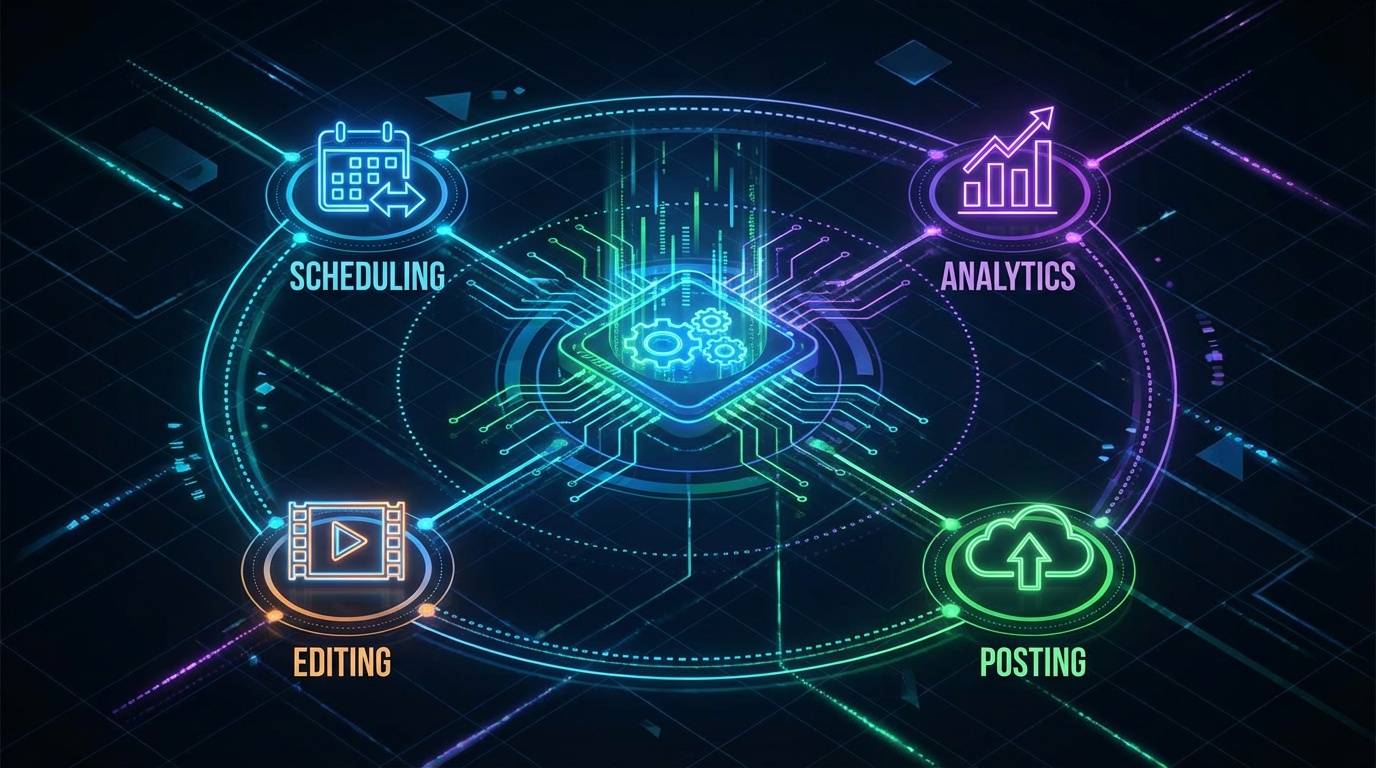
Managing 10+ daily posts manually is unsustainable. TikTok automation tools transform what used to take 30 minutes into 2 minutes when used correctly.
Post everywhere simultaneously. Upload once to your scheduling tool, select which accounts and platforms to post to, and it distributes automatically. What used to require logging into 6 different accounts and manually uploading now happens with a few clicks.
Schedule in advance for the entire week. Batch create on Sunday, schedule Monday-Friday posts automatically. The tool posts at optimal times (6-10 AM, 12-1 PM, 7-9 PM depending on platform) without you being awake. Time zone optimization happens automatically.
Manage multiple accounts from one dashboard. Connect all your TikTok, Instagram, YouTube, Facebook, Pinterest, Threads, and LinkedIn accounts once. Then simply select accounts with checkboxes when scheduling. No more juggling logins, browsers, and devices.
Popular automation tools include: Later, Hootsuite, Buffer, and Metricool for multi-platform scheduling. These tools connect via official APIs and are safe to use (they won't get you banned when used properly). Avoid shady third-party tools that scrape or use unofficial methods - those cause shadowbans. For a complete breakdown of automation strategies and tools, see our guide to automating your content farm.
Content generation is the other side of automation. While scheduling tools handle distribution, you still need to create the content itself. For businesses building organic marketing reach, an AI TikTok video generator like Renderfire automates the full pipeline-creation, distribution, and conversion-so you can focus on running your business. Connect your product, generate hook+demo videos, TikTok slideshows, UGC videos, faceless videos, chat mockups, and ads, then auto-publish directly to TikTok, Instagram, YouTube, Facebook, Pinterest, Threads, and LinkedIn. Use TikTok ideas from the TikTok Creative Center to stay relevant.
Once you've systematized workflows, building a team enables 5-10x output while maintaining quality. Document first, then delegate.
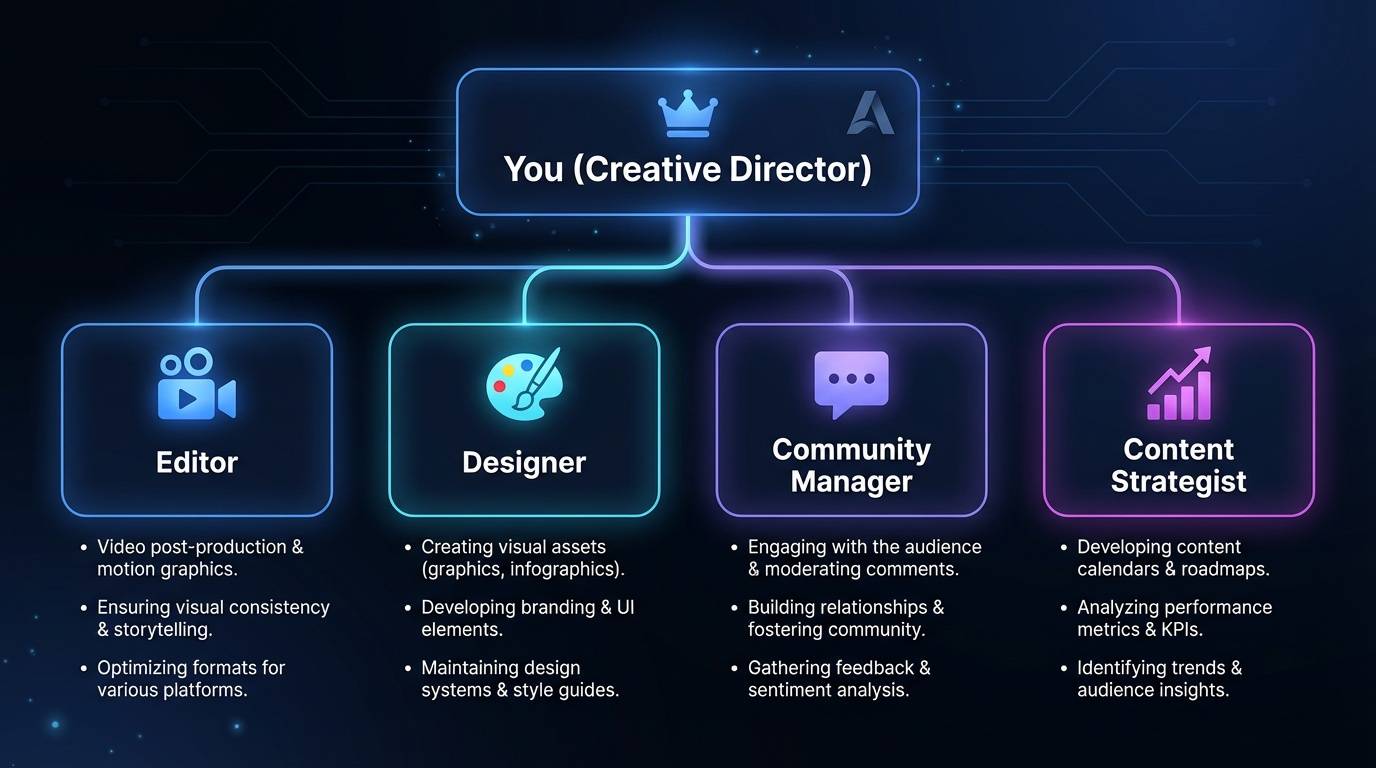
Solo scaling hits a ceiling around 10-15 posts per day. Beyond that, you need team members. But hire strategically - don't just throw money at people hoping they'll figure it out. Document your exact process first, then find people to execute it.
Editor: Adapts your master content for different platform specifications (9:16 vertical for Reels, 16:9 horizontal for YouTube, captions for accessibility). Good editors work from templates you provide, ensuring consistent quality across all output.
Designer: Creates thumbnails for YouTube, graphics for carousels, eye-catching text overlays. Design consistency is critical for brand recognition. Provide brand guidelines and examples so designers match your aesthetic.
Community Manager: Responds to comments, manages engagement, monitors mentions. As you scale to thousands of comments daily, personal response becomes impossible. A community manager maintains the human connection that built your audience.
Content Strategist: Plans topics, tracks trends, analyzes performance data. As content volume increases, strategy becomes its own full-time role. They identify what's working, what to double down on, and what to cut.
Start with contractors or part-time help before committing to full-time hires. Test team members on small projects to ensure they match your quality standards. Document everything - create SOPs (standard operating procedures) for every repeated task so training is scalable.
Consider paid ads only when organic reach plateaus, you have a proven offer with strong conversion, and budget for testing. Paid amplifies organic wins.
Most creators jump to paid ads too early. They think "If I just spend money, I'll get results!" But paid ads amplify your funnel - if your funnel converts at 1%, paid ads just give you more 1% conversion traffic. Fix conversion first, then add paid traffic.
When paid makes sense: You've exhausted organic growth on your main platforms. Your link-in-bio converts at 5%+ (strong funnel). You have budget to test ($1000+ monthly minimum for meaningful data). You've identified which content types convert best and can create ads based on those formats.
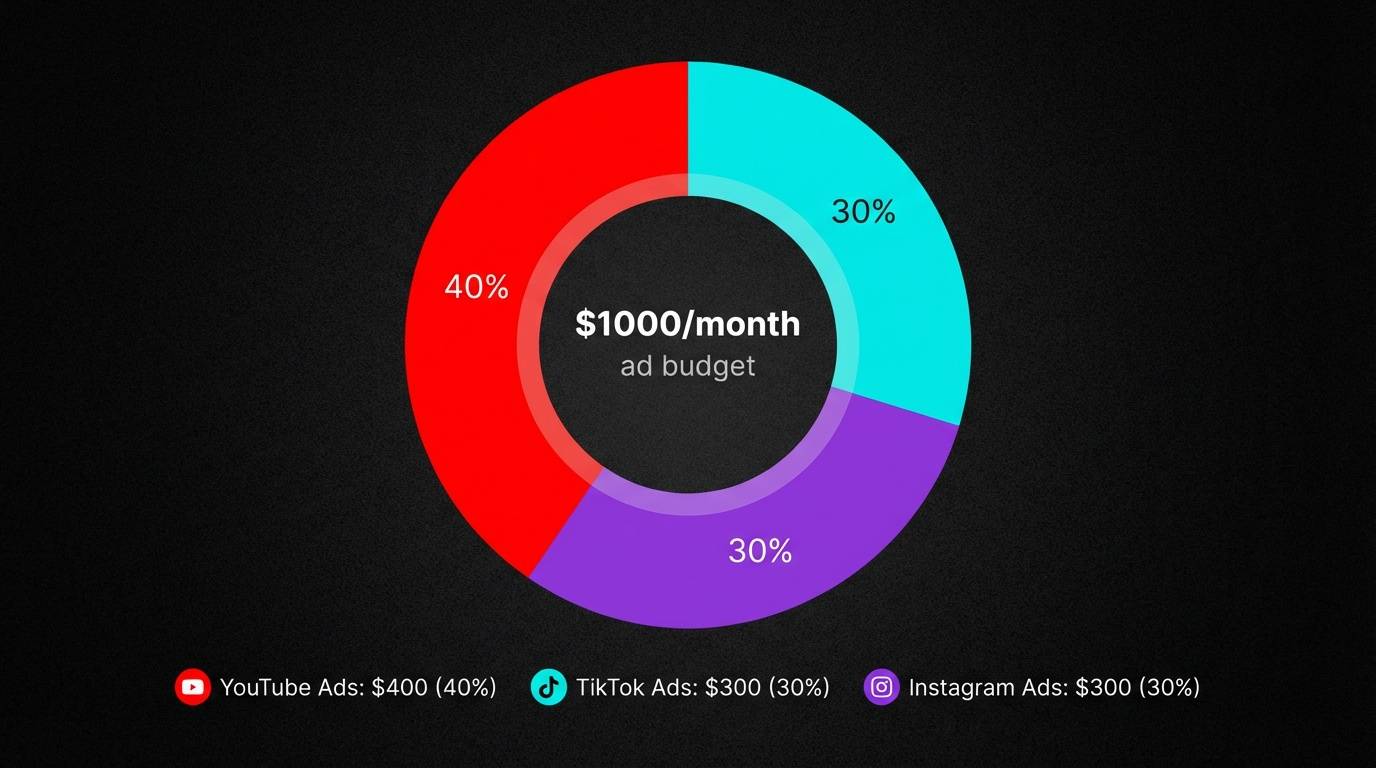
Platform allocation for $1000/month budget: YouTube Ads get 40% ($400) for pre-roll ads on related videos in your niche - higher intent traffic and better conversion. TikTok Ads get 30% ($300) for promoting high-performing organic posts with native-looking creative. Instagram Ads get 30% ($300) for Reels to lookalike audiences and retargeting engaged users.
Paid advertising best practices: Always use your best organic content as ad creative - if it performed well organically, it'll perform well as an ad. Start with small budgets ($10-20/day) and scale only winners. Track everything with UTM parameters so you know exactly which ads drive conversions. Focus on retargeting engaged users first (warm traffic converts 3-5x better than cold traffic).
Track the right metrics to understand what's working and where to invest more resources. Data drives smart scaling decisions.
Total views combined across all platforms. This is your overall reach metric. Are you actually reaching more people as you scale, or just spreading the same reach thinner? Growth should be multiplicative (2 accounts = 2x views), not additive (2 accounts = same views split differently).
Engagement rate by platform. Which platform's audience engages most? High engagement indicates strong audience fit. If Instagram gets 10% engagement but TikTok gets 3%, invest more in Instagram even if TikTok has more raw views.
Follower growth by platform. Track growth velocity, not just total followers. A platform adding 100 followers/day is more valuable than one with 10K followers but only gaining 10/day. Growth velocity indicates momentum.
Time vs. results (ROI per platform). Calculate how much time you invest per platform against results generated. If YouTube requires 5 hours per video but drives 50% of your conversions, that's efficient. If Twitter requires 2 hours daily for 2% of conversions, cut it.
Review these metrics weekly. Double down on what's working. Cut or reduce what's not. Scaling isn't about being everywhere - it's about strategically multiplying what already works and ruthlessly eliminating what doesn't.
Use tools that connect via official APIs: Later, Hootsuite, Buffer, and Metricool. Avoid shady third-party tools that scrape or use unofficial methods. Only automate accounts that are already getting 500+ views per video organically.
After you've systematized your workflows and hit a ceiling (around 10-15 posts per day solo). Document your exact process first with SOPs, then hire to execute it. Start with contractors or part-time help before committing to full-time hires.
Only consider paid when organic plateaus, your funnel converts at 5%+, and you have $1000+/month for testing. Allocate roughly: 40% YouTube Ads (higher intent), 30% TikTok Ads (native-looking creative), 30% Instagram Ads (retargeting). Start with $10-20/day per platform.