Soft Selling & Trust Building
Build genuine trust and audience connection through value-first selling.
8 min
Loading...
Ready to start automating?
Join hundreds businesses growing with Renderfire
Build genuine trust and audience connection through value-first selling.
Join hundreds businesses growing with Renderfire
Hard selling repels audiences; soft selling attracts quality customers. Follow the 80/20 rule: 80% value content, 20% promotional (and even that 20% should be 80% valuable). Build trust through 7-10 touchpoints before expecting conversion. Integrate products naturally through problem-solution storytelling, be transparent about limitations, and focus on building community over transactions.
The most effective sales happen when your audience doesn't feel like they're being sold to. Build trust first, sell second. Hard selling creates resistance and damages long-term relationships. Soft selling builds genuine connections that lead to higher lifetime customer value, lower refund rates, and organic word-of-mouth referrals. The paradox: the less you focus on selling, the more you actually sell.
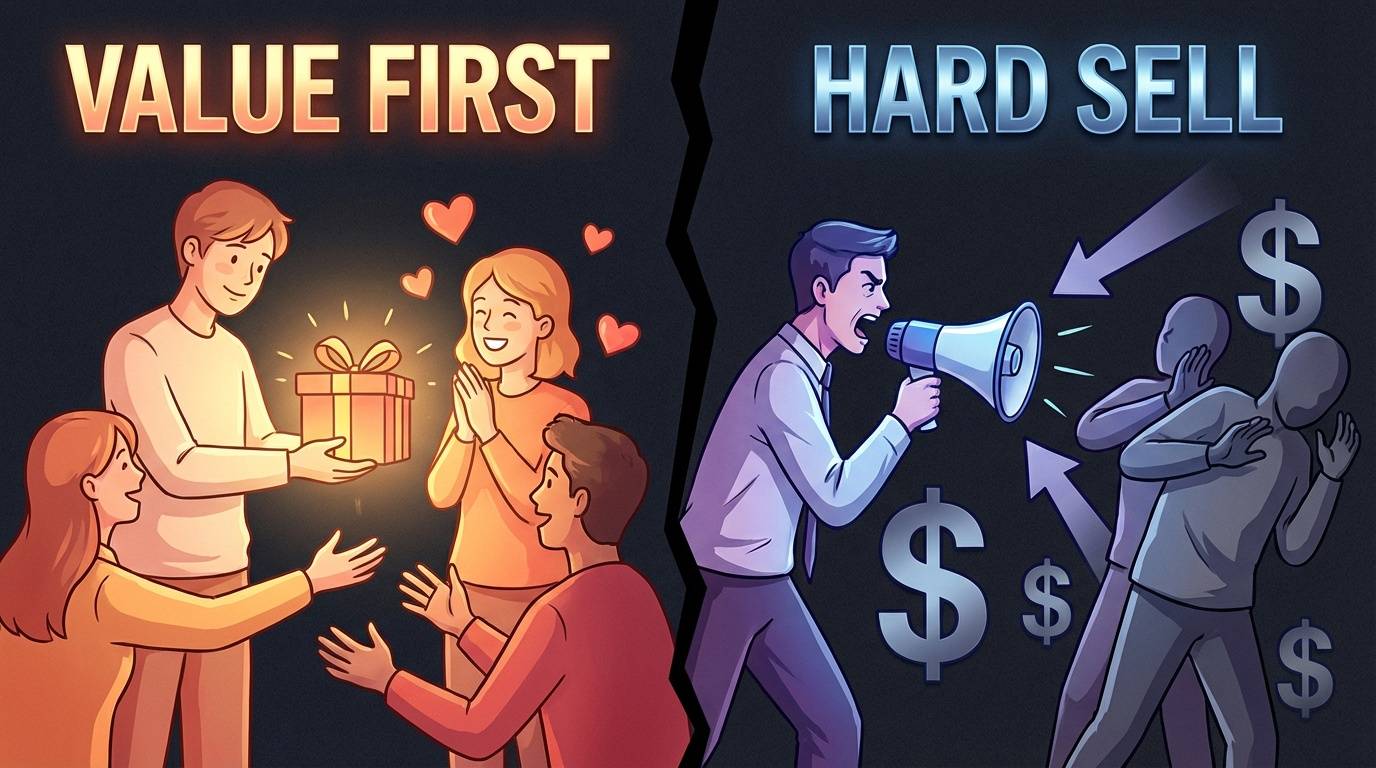
People hate being sold to, but they love buying things they discover themselves. Soft selling creates that discovery experience naturally.
Hard selling repels modern audiences. "Buy my product now!" feels aggressive and creates immediate resistance. High-pressure tactics ("limited time," "only 3 left," "buy now or regret it") work on a small percentage of bargain hunters but alienate everyone else. These customers have high refund rates and low lifetime value because they bought under pressure, not genuine interest.
Soft selling attracts quality customers. Provide value first without expecting anything in return. Build trust over time through consistent, helpful content. Integrate your product naturally into content that would be valuable even without the product mention. Focus on building relationships, not just transactions. These customers become loyal advocates who spread word-of-mouth referrals-the most valuable marketing.
The fundamental shift is from "How can I sell to this person?" to "How can I help this person?" When you genuinely help people solve problems through your content, they naturally want to support you by trying your product. It doesn't feel like being sold to-it feels like discovering a solution from someone they trust.
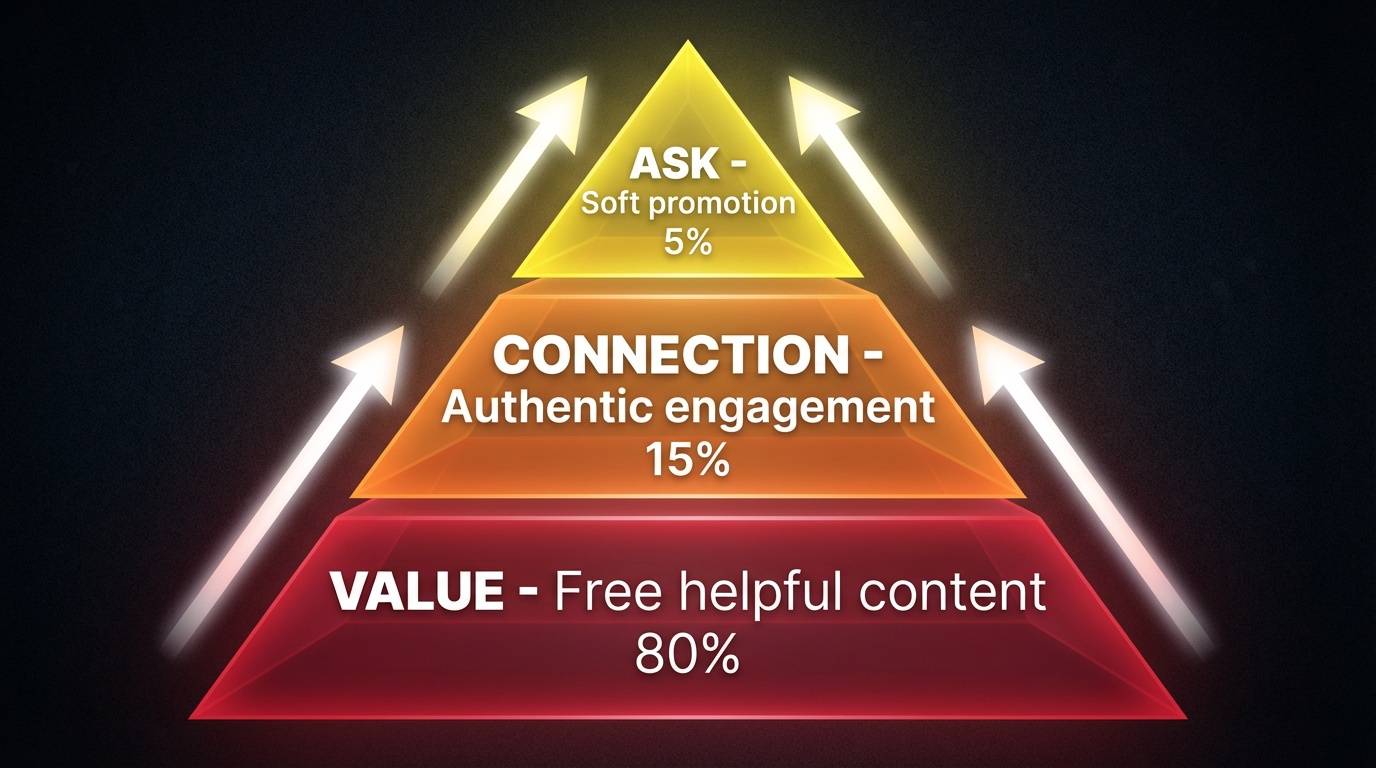
This is the golden ratio for content that sells without being salesy. For every 10 posts, 8 should provide pure value with zero selling.
80% value content: Educational tutorials, entertainment that makes people laugh or feel something, inspiration that motivates action, or problem-solving that addresses real pain points. These posts build trust, attract followers, and establish you as an authority. They give without asking for anything in return.
20% promotional content: Product mentions, calls-to-action, customer testimonials, or special offers. Even within this 20%, make sure 80% of that content is still valuable, with only 20% actually mentioning your product. For example, a 60-second video might provide 48 seconds of valuable content with a 12-second soft CTA at the end.
This ratio prevents audience fatigue. When someone follows you and sees constant sales pitches, they unfollow quickly. But when 8 out of 10 posts genuinely help them, they don't mind the occasional promotional content-in fact, they often welcome it because they want to support creators who provide value.
The beauty of the 80/20 rule is that your value content does the selling for you. By the time viewers see your promotional content, they already trust you and want what you're offering. The sale happens naturally because you've earned their trust through consistent value.
People need 7-10 touchpoints before taking action. Each stage requires multiple interactions-be patient and focus on consistent value delivery.
Stage 1: Awareness. They discover your content through algorithm recommendations, search, or shares. This is their first exposure-they're learning what you're about and whether you're worth following. Your goal isn't conversion yet; it's making a memorable first impression that encourages them to watch more.
Stage 2: Interest. Now they're watching multiple videos, following your account, and engaging through likes and comments. They've decided you're interesting enough to see more content from. This stage is about building trust and demonstrating consistent value. They're evaluating whether you're a one-hit wonder or someone worth continued attention.
Stage 3: Consideration. They click your link in bio, visit your website or app, and actively explore what you're offering. This is the critical transition from audience to prospect. Most drop-off happens here because the jump from content to offer feels jarring or unclear. Your content should naturally bridge this gap.
Stage 4: Conversion. They trust you enough to take action-downloading your app, purchasing your product, signing up for your service, or joining your community. They've moved from viewer to customer. This is where revenue happens, but it's the culmination of all previous stages done correctly-you can't skip straight here.
Stage 5: Advocacy. They love your product enough to recommend it to others and create user-generated content about it. This is the ultimate goal-customers who become promoters, bringing you new awareness-stage prospects and creating a self-sustaining growth loop.
Most people need to see your content 7-10 times before converting. That means watching 7-10 of your videos, seeing your product mentioned multiple times, and developing trust over days or weeks. Don't expect instant conversions. The journey from stranger to customer is a process, not an event.
Show your product in context rather than pushing it aggressively. Natural integration feels authentic and educates while gently guiding toward conversion.
Subtle mentions work better than hard pitches. "This is how I use [app name]..." casually shows your product in action without feeling like a sales pitch. You're demonstrating real usage, which is more convincing than any marketing copy. Viewers see the product solving a problem naturally, making them curious to try it themselves.
Problem → Solution format is highly effective. Start by presenting a common, relatable problem your audience faces. Share your personal struggle with that problem to build authenticity and connection. Introduce how you solved it (your product) naturally as part of your story. Demonstrate the solution in action, focusing on value delivered. Mention where they can get it as a soft call-to-action, not a pushy demand.
Example: "I used to waste hours editing videos manually... So I built [your tool] to automate the boring parts. Here's how it works..." This approach educates while selling. The content is valuable even without the product mention because you're teaching about the problem and solutions. The product becomes a natural part of the solution rather than forced promotion.
Behind-the-scenes content humanizes your brand. Share your journey building the product-the challenges, failures, and wins. This transparency builds trust and makes viewers feel invested in your success. When they see your struggles and dedication, they want to support you by trying your product. It's no longer just a transaction; it's supporting someone they feel connected to.
Customer stories provide powerful social proof. Real testimonials and results from actual users are more convincing than anything you can say about your own product. Feature customer success stories, before/after transformations, and genuine feedback. User-generated content is particularly valuable because it's authentic third-party validation that viewers trust more than branded content. For more on leveraging UGC effectively, see our TikTok UGC marketing guide.
Be honest about what your product does well AND what it doesn't do. Be transparent about who it's perfect for and who it's NOT for.
Honesty about limitations builds credibility. When you openly acknowledge what your product doesn't do well or who it's not for, people trust you more. Everyone knows no product is perfect-claiming perfection makes you look dishonest. Addressing limitations upfront prevents buyer's remorse and reduces refund rates because customers know exactly what they're getting.
Transparency filters for the right customers. When you clearly state "This product is perfect for X but not for Y," you attract people who actually need your solution and repel those who don't. This improves conversion rates (qualified leads), reduces support burden (fewer confused customers), and increases satisfaction (customers get what they expected).
Real stories resonate more than polished pitches. Share authentic experiences-both successes and failures. Talk about mistakes you made building the product. Discuss features that didn't work as planned. Show real usage with unedited footage. This authenticity creates emotional connection that polished marketing can't match. People connect with humans, not perfect brands.
Transparency reduces refunds significantly. When customers know exactly what they're getting-including limitations-they're far less likely to request refunds. Unrealistic expectations are the primary driver of refunds. Set realistic expectations upfront through transparent communication, and you'll have happier customers who stick around longer.
People who feel they belong to something bigger become your most loyal advocates. Community creates sustainable growth through word-of-mouth.
Ask questions that foster genuine engagement. "What's your biggest challenge with X?" invites real conversation rather than passive consumption. Questions signal that you care about your audience's experience, not just their money. The responses also provide valuable insights into pain points you can address in future content.
Respond genuinely to every comment early on. When your account is small, personally responding to every comment builds deep connections. People remember when you took time to respond thoughtfully. This early investment in community pays dividends-those early engaged followers become your most vocal advocates as you grow.
Create discussion with respectful opinions. Don't be afraid to take stands on relevant topics in your niche. Thoughtful opinions (not inflammatory hot takes) spark conversations and help people understand your values. People follow creators they connect with philosophically, not just creators who entertain them.
Foster belonging through insider language and recognition. Create terms, phrases, or concepts unique to your community. Recognize longtime followers by name when they comment. Celebrate community milestones together. When people feel like insiders in your community, they're emotionally invested in your success and become natural promoters. For more on building these relationships, see our creator collaboration playbook.
Finding the right balance is key. Too subtle and people don't know you have a product. Too aggressive and you lose trust.
Being too subtle is almost as bad as being too aggressive. Some creators are so focused on "not being salesy" that they never mention their product. Their audience loves their content but has no idea they offer something for sale. You need to mention your product regularly-just do it naturally within valuable content rather than as the entire focus.
Don't apologize for selling. "Sorry for the promo but..." signals that you think selling is bad. If you've created something valuable that genuinely helps people, you should be confident sharing it. Apologetic language undermines trust-if even YOU don't seem convinced your product is worth buying, why should your audience?
Fake authenticity backfires spectacularly. Forced enthusiasm, scripted "genuine" reactions, or manufactured excitement are obvious and cringe-worthy. People can detect inauthenticity instantly. If you're not genuinely excited about your product, figure out why and fix that before trying to sell it. Real passion shows through and can't be faked convincingly.
The balanced approach works best. Lead with value in 80% of content. Make subtle product mentions in valuable content rather than dedicated sales pitches. Be confident sharing what you've built-your product genuinely helps people. Show real enthusiasm that comes from actually believing in what you're offering. This balance builds trust while driving conversions.
Follow the 80/20 rule: 80% of your content should provide pure value with zero selling. In your 20% promotional content, lead with value first—80% of that content should still be valuable, with only 20% mentioning your product. Use problem-solution storytelling rather than direct pitches.
Most people need 7-10 touchpoints before converting. This means watching 7-10 of your videos, seeing your product mentioned multiple times, and developing trust over days or weeks. Don't expect instant conversions—the journey from stranger to customer is a process, not an event.
Absolutely. Honesty about limitations builds credibility—everyone knows no product is perfect. Transparency filters for the right customers, reduces refund rates, and creates emotional connection that polished marketing can't match. State clearly who your product is for AND who it's not for.