
How to Evaluate Your App Idea: A Framework for Founders

TL;DR
A good app idea is not about the idea itself-it's about the alignment between your idea space (set of solutions to a real problem), the game you're playing (VC-backed vs bootstrapped), and market momentum (timing relative to trends). Add founder-market fit (your unique ability to execute), and you have a complete evaluation framework. The best ideas solve big problems simply, match the founder's chosen business model, ride relevant market trends, and leverage the founder's specific skills and experience.
Why Most App Idea Evaluations Miss the Point
The question "Is my app idea any good?" seems simple, but the answer depends entirely on context. A brilliant idea for one founder might be terrible for another. Evaluating an app idea requires looking beyond the concept itself to consider everything surrounding it: the problem space, the business model, market timing, and the founder's fit with the opportunity.
A dating app might be a genius move for someone with deep experience in social products and access to growth capital. For a solo developer bootstrapping their first product, the same idea makes little sense. Good app ideas are first and foremost feasible ideas-and feasibility varies dramatically based on resources, skills, and circumstances.
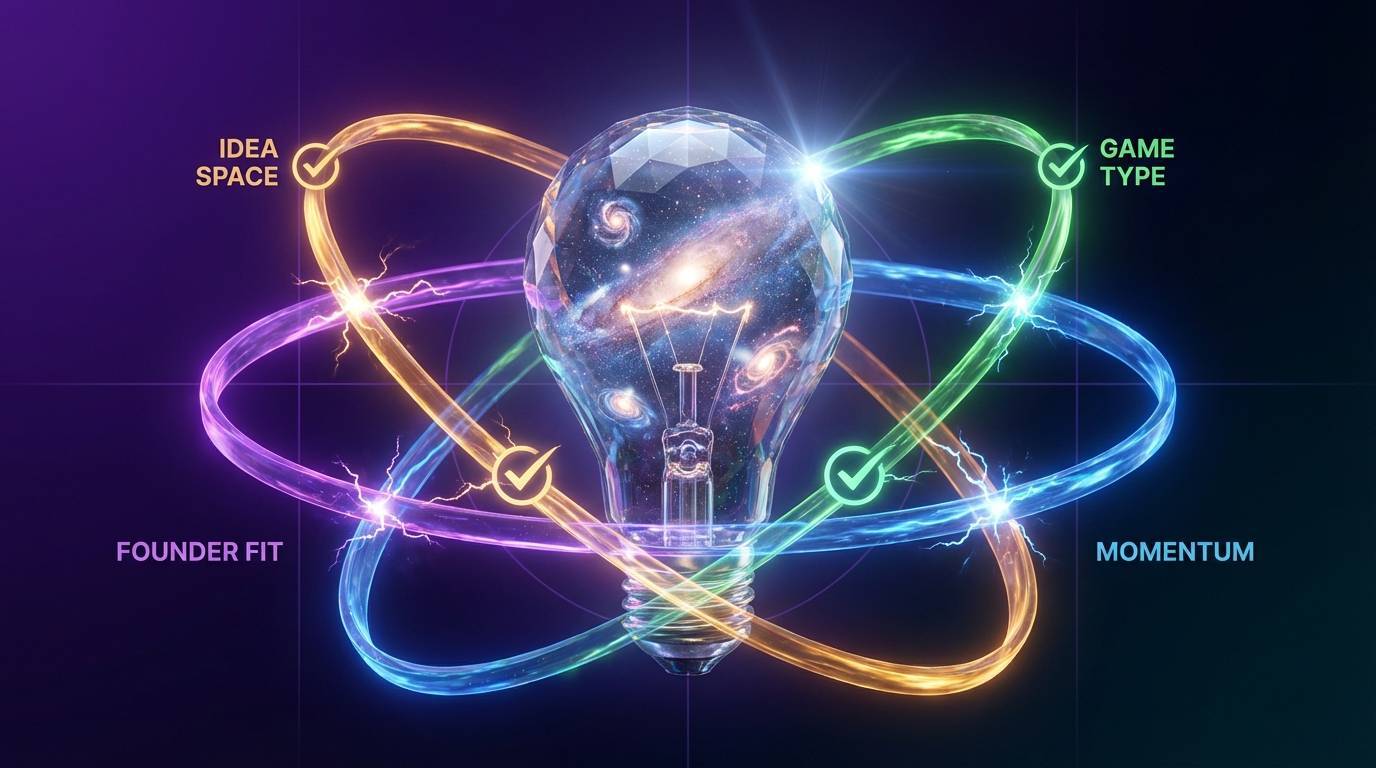
This framework helps evaluate app ideas by examining four interconnected elements:
- Idea Space - The problem and range of possible solutions
- The Game - The business model and its rules
- Momentum - Market timing and trend alignment
- Founder-Market Fit - Your unique ability to execute
Idea vs Idea Space: Why Flexibility Matters
The specific idea for a mobile app matters far less than most people believe. The common narrative imagines success coming from a groundbreaking concept born in a moment of genius. Reality tells a different story-most successful apps and tech companies found success with ideas very different from where they started.
Instagram began as Burbn, a location-based check-in app. Slack started as an internal tool for a gaming company. YouTube was originally a video dating site. The founders succeeded not because they had perfect initial ideas, but because they operated within strong idea spaces and adapted based on market feedback.
What Is an Idea Space?
Instead of locking into a single, rigid concept, think in terms of an idea space-a set of possible solutions to a specific problem for a defined group of people. This mental model acknowledges an important truth: predicting exactly how markets will respond to any specific implementation is impossible. Testing in the real world and evolving based on feedback determines success.
Facebook illustrates this approach well. Mark Zuckerberg started within a strong idea space: making it easier for students to communicate with each other. Before arriving at the Facebook we know today, he explored multiple directions-starting with Facemash (comparing student photos), then launching TheFacebook as a simple online directory exclusively for students. These iterations refined the approach until the right solution emerged.
Identifying a Strong Idea Space
A good idea space starts with a real, significant problem faced by a specific group of people-one they're willing to pay to solve. As one successful app founder put it: a good idea solves a big problem in a simple way, rather than overcomplicating a small problem.
Evaluate problem severity
Assess the affected population
Analyze existing solutions
Consider future trajectory
Exploring multiple solutions to a well-defined problem beats forcing a fixed solution onto a problem that may not exist. Let ideas emerge naturally, then refine positioning based on real market feedback.
The Different Games: VC-Backed vs Bootstrapped
Starting a business resembles playing a game with specific rules, strategies, and win conditions. Different games exist-local businesses, national companies, international startups-each with distinct playbooks and competitive dynamics.
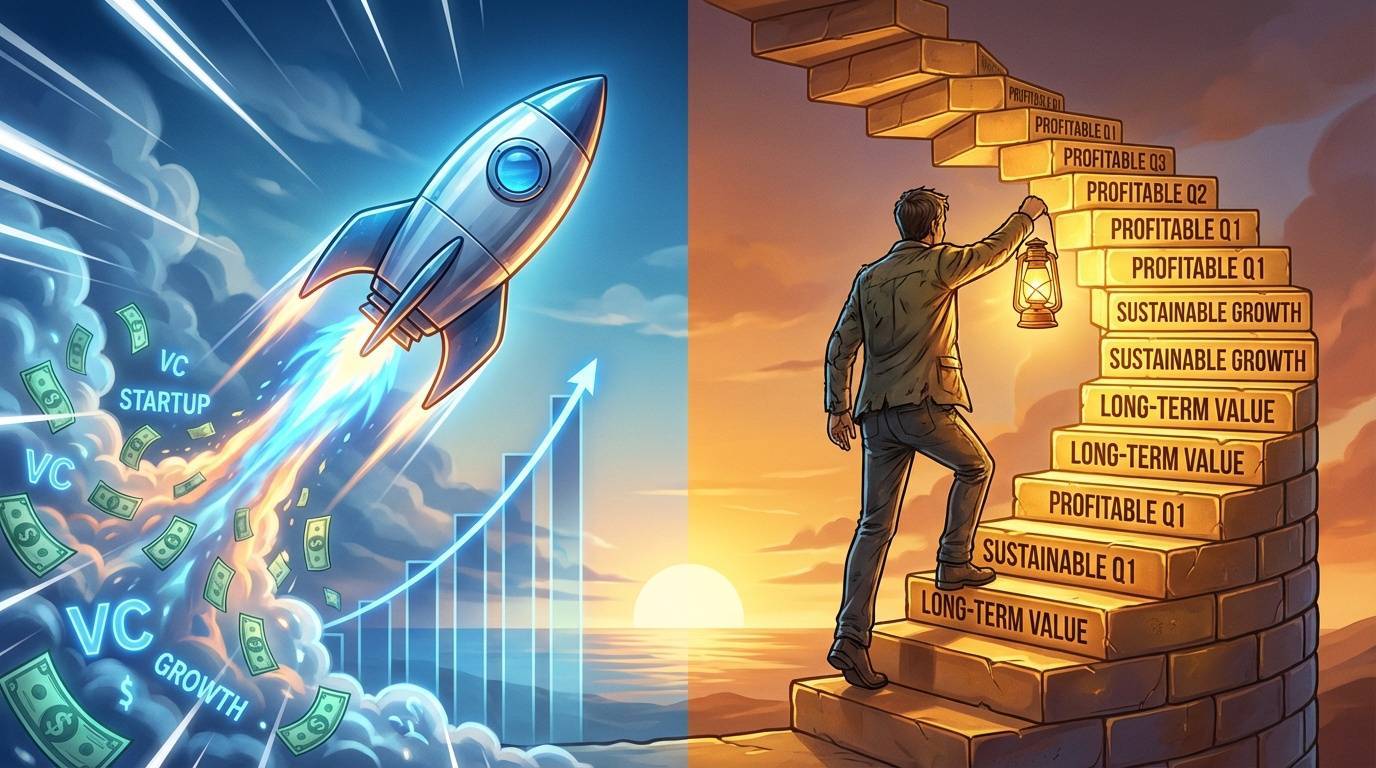
For mobile apps, two fundamentally different approaches dominate:
The Disruptive Approach (VC-Backed)
This game suits companies aiming to disrupt existing markets. Social apps, marketplaces, and platforms relying on network effects fall into this category-products like dating apps, social networks, and two-sided marketplaces.
Characteristics
When this game makes sense
The Bootstrapped Approach (Self-Funded)
This game prioritizes direct and fast profitability through precise, targeted solutions that monetize immediately. These products don't necessarily disrupt entire markets-they solve specific problems efficiently while generating cash early.
Characteristics
When this game makes sense
Strong categories for bootstrapped apps
Matching Idea Space to Game
The idea space must align with the chosen business game. Aspiring to build the next top dating app requires following the VC-backed playbook: raising funds, recruiting experienced teams, implementing viral growth strategies, and competing for market dominance.
Choosing the bootstrapped approach suggests focusing on more accessible, niche markets where individual products can achieve profitability without massive scale. Both paths can succeed-but mixing strategies leads to failure.
The marketing strategies covered in the LSDCP Framework work across both games, though emphasis differs. Bootstrapped apps often prioritize organic distribution and creator partnerships earlier, while VC-backed apps may move to paid acquisition faster once product-market fit is established.
The Right Momentum: Timing Is Everything
A brilliant idea launched too early or too late may never succeed. Timing determines whether markets embrace solutions or ignore them.

What Creates Momentum
Ideas aligned with market timing succeed when they:
- Ride recent cultural or technological shifts - New behaviors, platforms, or capabilities create opportunity windows
- Address emerging user demands - Problems gaining attention attract solution-seekers
- Capture long-term attention and engagement - Sustainable trends outlast temporary fads
Real Momentum vs Fake Momentum
A crucial distinction exists between real momentum and fake momentum-the illusion of quick success driven by artificial hype. Fake momentum happens when ideas ride short-lived trends without lasting value. Once public attention shifts, these products inevitably fade.
Signs of real momentum
Signs of fake momentum
BeReal exemplifies real momentum. The app captured a genuine cultural shift-young users growing tired of polished, curated content on Instagram and TikTok. The demand for authenticity wasn't a fad; it reflected deeper changes in how people wanted to use social media. Whether BeReal specifically succeeds long-term, the underlying trend toward authenticity persists.
Evaluating Momentum for Your Idea
Ask these questions:
- What broader trend does this idea connect to?
- Is the trend accelerating, stable, or declining?
- How long has the underlying shift been developing?
- Will this need still exist in 3-5 years?
- Are early adopters enthusiastic or skeptical?
Founder-Market Fit: Your Unique Advantage
The final element transcends the idea itself-founder-market fit is the natural alignment between a founder and their market. When skills, experience, vision, and personality make someone the ideal person to execute a specific idea, success probability increases dramatically.
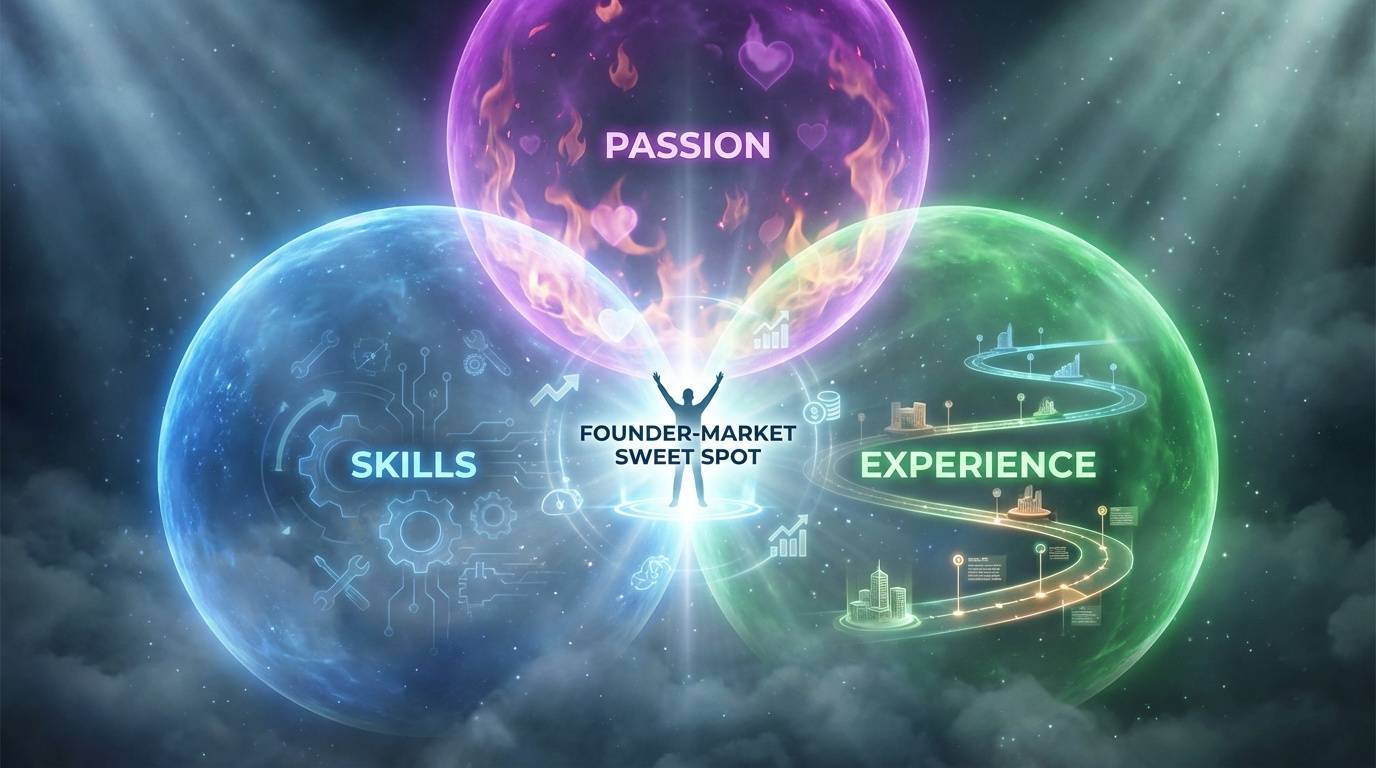
Why Founder-Market Fit Matters
Deep understanding of users-their habits, frustrations, and needs-enables building solutions that naturally fit into their lives. This insight comes from proximity to the problem, whether through personal experience, professional background, or intentional immersion.
Founder-market fit also affects persistence. Building successful apps takes years, not months. Founders working on problems they genuinely understand and care about sustain effort through inevitable challenges.
Evaluating Your Own Fit
Positioning and credibility
Passion and persistence
Execution capability
Example: Strong Founder-Market Fit
The founder of Bumble demonstrates excellent alignment:
- Market knowledge - As former VP of Marketing at Tinder, she understood dating app dynamics and growth levers deeply
- User understanding - By focusing on women's experience, she created strong differentiation with credible positioning
- Game expertise - Familiar with the VC-backed startup ecosystem, she knew the playbook for raising funds and competing in ultra-competitive markets
This alignment doesn't guarantee success, but it dramatically improves odds compared to founders entering unfamiliar territories without relevant advantages.
Putting the Framework Together
Evaluating an app idea means checking alignment across all four elements:
| Element | Key Question | Red Flag |
|---|---|---|
| Idea Space | Does this solve a real, painful problem? | Solution searching for a problem |
| Game | Does the business model match the opportunity? | VC ambitions for niche market (or vice versa) |
| Momentum | Is the timing right for this solution? | Chasing fads or arriving too late |
| Founder-Market Fit | Are you uniquely positioned to execute? | No relevant experience or advantage |
Strong ideas show alignment across all four. Weakness in one area doesn't necessarily kill an idea, but it identifies where additional work, resources, or pivots may be needed.
Applying This to Content Strategy
Once an idea passes this evaluation framework, content marketing becomes critical for validation and growth. Testing content that speaks to the target audience reveals whether the problem resonates as expected.
Tools like Renderfire help founders quickly produce content variations to test messaging, hooks, and positioning across platforms-gathering real market feedback before heavy product investment. This approach works especially well for SaaS companies validating new features or products.
The Viral Formula course covers how to create content with high viral coefficients-essential for both VC-backed apps seeking network effects and bootstrapped apps pursuing organic growth.
Common Mistakes to Avoid
Falling in love with the solution
Ignoring the game's rules
Confusing buzz with momentum
Overestimating founder-market fit
Skipping problem validation
Frequently Asked Questions
How do I know if my problem is "big enough"?
Big problems show clear signals: people actively searching for solutions, spending money on inadequate alternatives, expressing frustration in communities, and repeatedly encountering the issue. If solving the problem significantly impacts users' time, money, energy, or well-being, it's likely big enough.
Can I switch from bootstrapped to VC-backed later?
Yes, this transition happens frequently. Companies that prove product-market fit and sustainable unit economics through bootstrapping often become attractive to investors. The reverse (VC-backed to bootstrapped) is much harder once growth expectations and burn rates are established.
What if my idea doesn't fit my background?
Two options exist: develop the missing knowledge through intentional immersion (talk to users, work in the industry, build adjacent products), or find co-founders who bring complementary founder-market fit. Solo founders tackling unfamiliar markets face steep odds.
How long should I test before pivoting?
No universal timeline exists, but 8-12 weeks of active testing (not just building) usually provides enough signal. If target users consistently don't engage, don't pay, or don't retain, the specific solution needs evolution-though the underlying idea space may still be valid.
What's the minimum viable momentum?
Look for rising search trends, growing community discussions, recent successful products in adjacent spaces, or emerging platform features that enable new solutions. If you can't point to any external tailwinds, timing may be off.
Should I validate the idea before building?
Always. Validation doesn't require a finished product-landing pages, mockups, manual service delivery, and content testing all provide market feedback before significant development investment.
Key Takeaways
- 1 Evaluate idea spaces (problems with multiple potential solutions) rather than fixed ideas-flexibility to pivot based on feedback determines success
- 2 Match your business model to the opportunity: VC-backed for network-effect products, bootstrapped for direct-value utilities
- 3 Real momentum comes from genuine behavioral shifts, not temporary media attention or trending topics
- 4 Founder-market fit-your unique positioning to execute-dramatically affects success probability
- 5 Strong app ideas show alignment across all four elements: idea space, game, momentum, and founder-market fit
- 6 Validate before building: test messaging, positioning, and willingness to pay before significant development investment
More Posts

Ready to start automating?
Join hundreds businesses growing with Renderfire