
Character Consistency in AI Video: Techniques That Actually Work (2026)

TL;DR
Character consistency - maintaining stable identity across multiple AI-generated images or video frames - is one of the hardest challenges in AI content creation. The problem stems from how most AI models process each prompt independently without memory of previous generations. Solutions include reference image anchoring, IP adapters, face-lock technologies, and multi-frame aware systems. For professional workflows, consistency determines credibility - audiences instantly sense when characters drift between frames, breaking immersion and trust.
The Consistency Problem in AI Generation
Every creator working with AI generation eventually hits the same wall: consistency. You generate one perfect image or scene, then try to create a second one with the same character, and suddenly the face changes, the lighting shifts, or the background no longer matches. The result looks impressive in isolation but disjointed as a sequence.
This issue, known as the consistency gap, has become one of the most common frustrations for designers, filmmakers, advertisers, and storytellers using AI. While AI tools can produce detailed outputs, they often fail to maintain stable identity across multiple frames or images. Facial structure changes slightly, proportions shift, and stylistic cues fade between generations.
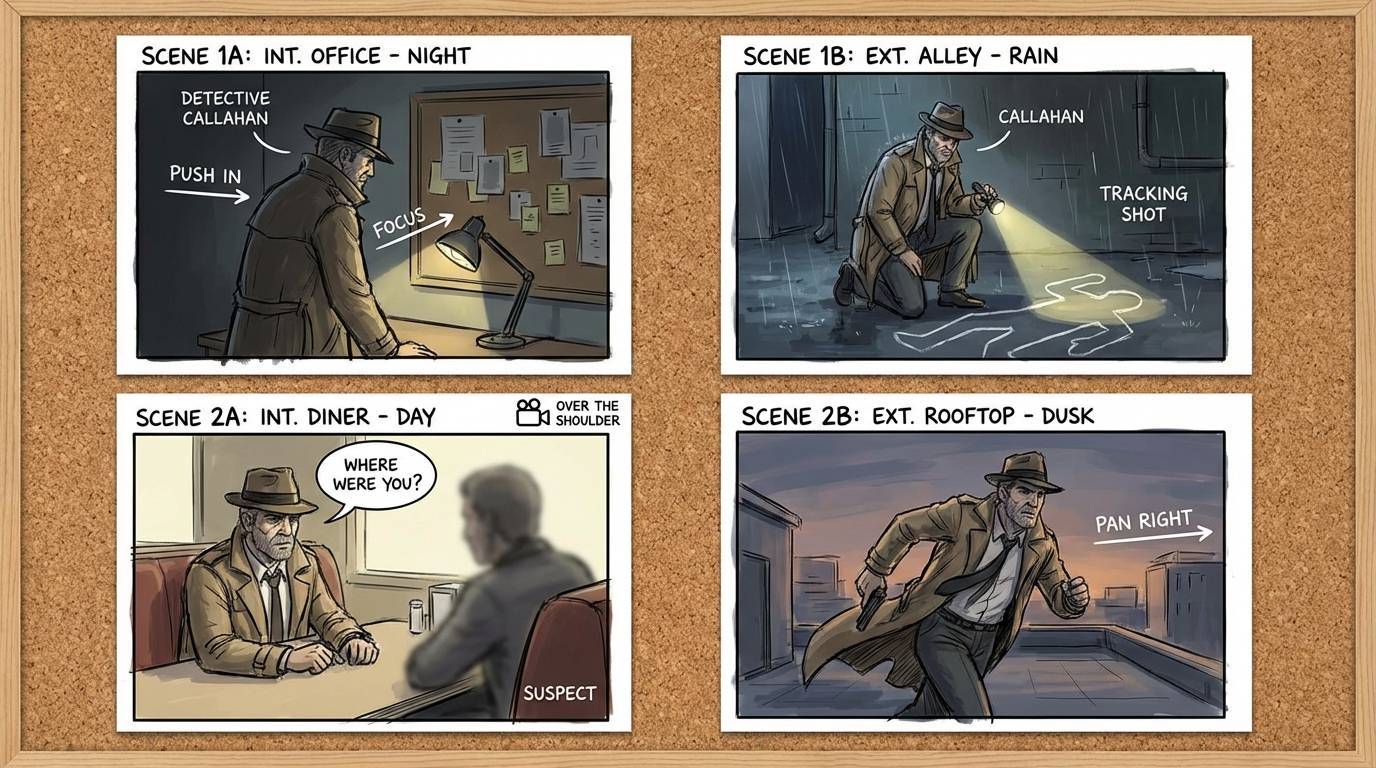
For professionals who need continuity - whether across brand visuals, storyboards, or multi-frame narratives - these small inconsistencies create major problems. They disrupt emotional flow, visual identity, and storytelling logic.
Why Consistency Is So Hard for Most AI Tools
Most AI generators are built for single-image generation. Their models process each prompt independently, optimizing for visual quality rather than continuity. While this approach works for one-off images, it breaks down when creators attempt to produce a series - because the model has no persistent memory of what came before.
Here's what typically goes wrong:
Character drift – Facial features, hairstyles, or expressions subtly change with every new prompt. A character might have slightly different eye spacing, nose shape, or jawline between generations.
Lighting mismatch – The same environment looks different from one frame to another. Shadows fall in different directions, color temperature shifts, and the overall mood changes unpredictably.
Stylistic inconsistency – Colors, textures, and artistic tones shift between generations. What started as a warm, cinematic look becomes cooler or more saturated without any prompt changes.
Proportional changes – Body proportions, clothing details, and accessories change subtly. A character's height relative to objects, or the exact design of their outfit, drifts between frames.

Even when users try to guide the generator with reference images, traditional AI systems interpret each input as a new task. The result is a collage of styles rather than a coherent visual story.
Techniques for Achieving Character Consistency
Several approaches have emerged to solve the consistency problem, each with different tradeoffs between ease of use, quality, and flexibility.
Reference Image Anchoring
The most straightforward approach involves providing reference images that the AI uses as visual anchors. By uploading images of your character from multiple angles, the model gains more information to maintain consistency.
Angle Coverage
Facial Detail
Lighting Consistency
Style Matching
This approach works well for basic consistency but often struggles with significant pose changes or new environments.
IP Adapters and Identity Preservation
IP (Image Prompt) Adapters represent a more sophisticated solution. These systems extract identity features from reference images and inject them into the generation process, creating a persistent "identity model" that carries across generations.
How IP Adapters work:
- Upload one or more reference images
- The system extracts facial features, proportions, and identifying characteristics
- These features are encoded into a reusable identity embedding
- All subsequent generations reference this embedding for consistency
IP Adapters provide stronger consistency than simple reference images, particularly for facial features. However, they can sometimes struggle with extreme angles or expressions not present in the original references.
Face-Lock and Identity Technologies
Specialized face-lock systems focus specifically on maintaining facial consistency by creating detailed facial maps that preserve eye spacing and shape, nose structure and proportions, jawline and facial contours, skin texture and tone, and expression mapping. These systems work particularly well for talking head videos and portrait sequences where facial consistency is paramount, as they encode the geometric relationships between facial features rather than just the appearance.
Multi-Frame Aware Generation
The most advanced approach involves AI systems designed from the ground up for multi-frame generation. Rather than treating each image as independent, these systems understand frames as connected parts of a larger visual sequence.
Multi-frame awareness enables automatic identity persistence across frames, consistent lighting direction and intensity, smooth transitions between poses and expressions, and environment continuity as scenes progress. This approach essentially mimics how film directors maintain continuity from one shot to the next during production - each frame references adjacent frames for context, and the system optimizes for sequence coherence rather than individual frame quality.
Practical Workflow for Consistent Characters
Achieving consistency requires more than just the right tools - it requires a systematic workflow.
Step 1: Character Bible
Step 2: Anchor Image
Step 3: Consistent Prompting
Step 4: Batch Similar Scenes
Step 5: Review and Iterate
Tools and Platforms for Consistent Generation
Different tools offer varying levels of consistency support. Modern image generators like those available through Renderfire offer consistency features including reference image support and style locking - when generating marketing visuals, product images, or character portraits, these tools help maintain brand consistency across campaigns. Video consistency is even more challenging since it requires frame-to-frame stability, but advanced video models now include subject consistency locks, motion-aware identity preservation, and temporal coherence optimization. When creating content across multiple formats - social posts, ads, website images - consistency becomes a brand issue, and tools that support batch generation with locked parameters help maintain visual identity across all touchpoints.
Common Mistakes That Break Consistency
Avoid these pitfalls when working toward consistent characters:
Prompt Volatility
Reference Mismatch
Over-Reliance on Text
Technical Oversights
Frequently Asked Questions
What causes character drift in AI generation?
Character drift occurs because most AI models process each generation independently without memory of previous outputs. The model optimizes each image for quality based on the prompt, but small variations in interpretation accumulate across generations, causing gradual changes in facial features, proportions, and style.
Can I achieve perfect consistency with current AI tools?
Near-perfect consistency is achievable with the right workflow and tools, but some variation is inherent to AI generation. The goal is minimizing drift to levels that don't break immersion. Multi-frame aware systems and strong reference image workflows can achieve 95%+ consistency for most use cases.
How many reference images do I need for good consistency?
For basic consistency, 1-3 high-quality reference images work well. For complex projects requiring multiple angles and expressions, 5-10 reference images covering different poses, angles, and lighting conditions provide more robust anchoring. Quality matters more than quantity - clear, well-lit references outperform numerous low-quality images.
Does consistency work differently for video vs images?
Yes. Video requires frame-to-frame temporal consistency in addition to character consistency. Video models must maintain smooth transitions between frames while preserving identity. This adds complexity but also provides context - each frame can reference adjacent frames for better continuity.
How do I maintain consistency across different scenes or locations?
Lock your character's core features while allowing environment variation. Use the same reference images and character descriptions regardless of scene. Generate the character first, then modify backgrounds and lighting. Some tools allow separating subject and environment generation for better control.
What's the best approach for consistent AI characters in marketing?
Create a comprehensive character bible before any generation. Establish anchor images for each character or mascot. Use consistent prompting templates across all marketing assets. Consider tools that support batch generation with locked parameters to ensure brand consistency across campaigns.
Key Takeaways
- 1 Character consistency is the biggest challenge in AI generation - most models process each prompt independently without memory
- 2 The consistency gap causes character drift, lighting mismatches, and stylistic inconsistency across generations
- 3 Solutions range from simple reference images to advanced IP adapters and multi-frame aware systems
- 4 A systematic workflow matters: establish character bibles, create anchor images, use consistent prompting, and batch similar scenes
- 5 Common mistakes include changing prompts dramatically, using inconsistent references, and skipping the anchor image step
- 6 Near-perfect consistency is achievable with proper tools and workflows - the goal is minimizing drift below the threshold of audience perception
More Posts

Ready to start automating?
Join hundreds businesses growing with Renderfire